Yabloko Clears Novgorod Threshold, Preserving a Strategic Ballot Advantage
The party’s 6.2% showing in Novgorod gives it a regional foothold with practical implications for future State Duma access.
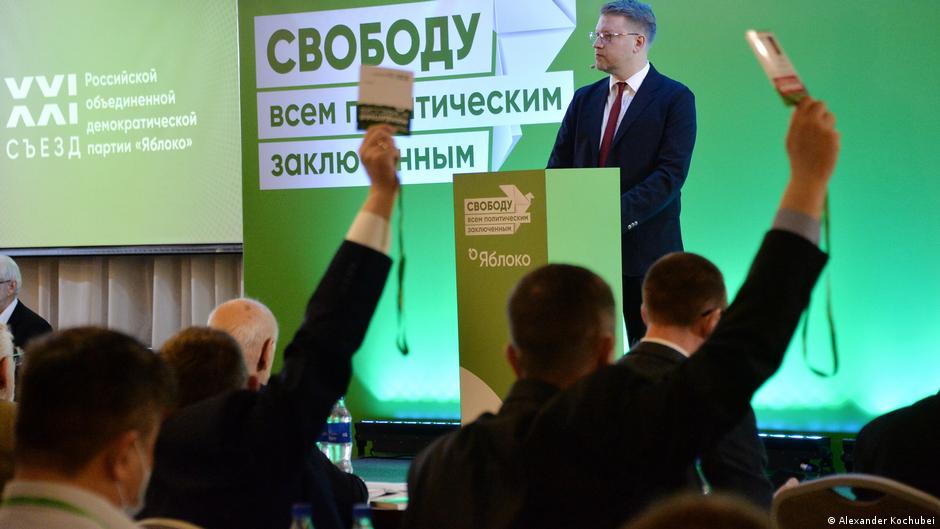
Russia’s liberal Yabloko party is on course to enter the Novgorod regional legislature, a result that carries significance beyond the size of the vote share and the composition of one provincial parliament. According to Russia’s Central Election Commission, the party had 6.2% of the vote after 96.86% of protocols were counted in elections to the eighth convocation of the Novgorod Regional Duma. By crossing the 5% threshold, Yabloko secures representation in the regional legislature and, with it, a practical electoral asset: the ability to continue taking part in State Duma elections without collecting signatures.
For a party operating in a highly constrained political market, that procedural advantage is not a technical footnote. It functions as a form of institutional capital. In a system where access to the ballot can determine whether political actors remain visible, regional representation becomes a strategic resource, helping preserve national-level options even when broader conditions are unfavorable.
The preliminary result also marks an improvement from the previous election at the same level. In 2021, Yabloko received 3.83% of the vote in the Novgorod regional contest. Its current 6.2% showing therefore represents a material gain, sufficient to move the party from outside the legislature to inside it, despite an election campaign described by a party source as exceptionally difficult.
A Regional Seat With National Consequences
The business logic of the result lies in access, continuity and risk management. Yabloko’s immediate gain is not control of the Novgorod Duma, where larger parties remain ahead, but the preservation of a compliance route into future federal contests. A source in Yabloko told DW anonymously that the Novgorod outcome had a “quite practical meaning” for the party, because having a deputy in a regional parliament would allow Yabloko to continue participating in State Duma elections without collecting signatures.
“For the party it also has a quite practical meaning: the presence of a deputy in a regional parliament will allow Yabloko to continue participating in State Duma elections without collecting signatures.”
The same source said Yabloko previously had three regional factions, in Pskov, St. Petersburg and Karelia, but that its lists there had been removed. Against that background, the Novgorod result becomes a replacement foothold. In corporate strategy terms, the party has preserved a critical license to operate after losing other channels. The victory is narrow in electoral terms, but potentially large in operational value.
The broader Novgorod vote, according to the Central Election Commission data cited in the source article, shows United Russia leading with 38.37%. The Communist Party was at 14.54%, the Liberal Democratic Party at 12.01%, New People at 9.87%, A Just Russia at 7.7%, and the Party of Pensioners at 5.55%. Yabloko’s 6.2% places it near the lower end of parties entering the legislature, but above the threshold that determines whether votes convert into representation.
Campaign Constraints and Reputational Risk
The campaign environment added another layer to the result. The Yabloko source told DW that the party’s entire list on the ballot was marked with a label about a “foreign agent” because the list leader, party deputy chair Anna Cherepanova, had been recognized as affiliated with a “foreign agent.” The source also said Cherepanova herself had been removed from the election because of an administrative case under Article 20.3 of Russia’s Code of Administrative Offenses.
Despite those factors, the party cleared the threshold. From a management perspective, the result suggests the organization’s regional brand and voter base retained enough resilience to withstand both the removal of its list leader and the reputational burden of ballot labeling. The source’s assessment was that neither the label nor the removal of the list leader prevented the party from producing a strong result.
That point matters because political competition, like commercial competition, depends not only on headline market share but also on distribution, brand durability and the ability to sustain operations under pressure. For Yabloko, Novgorod appears to have become a test of whether its remaining political infrastructure could still convert recognition into votes when faced with legal and administrative headwinds.
Competitive Landscape After Federal Exclusion
The Novgorod result follows a major setback at the federal level. On August 10, Russia’s Supreme Court removed Yabloko’s federal list from the State Duma elections following a lawsuit by Rodina, which accused the party, among other things, of copyright violations and illegal payments for election campaigning. Nevertheless, Yabloko candidates in single-member districts are still taking part in the vote.
This creates a split operating model for the party. Its federal list has been excluded, narrowing national exposure, while single-member candidates remain in the field and regional representation may preserve future ballot access. The Novgorod outcome therefore helps mitigate some of the strategic damage caused by the removal of the federal list, although it does not reverse that decision.
The political positioning of Yabloko also distinguishes it from competitors. The source article notes that among Russian parties, only Yabloko opposed the war in Ukraine. Jürgen Hardt, the foreign policy spokesperson for the CDU/CSU parliamentary group in the Bundestag, previously told DW that by removing the party, Russian President Vladimir Putin had “excluded from the electoral process the last significant voice of opposition.”
For Biz Review readers, the central takeaway is that Yabloko’s Novgorod result is less about a regional vote count in isolation and more about institutional survivability. The party remains a small player in the formal distribution of votes, far behind United Russia and trailing several other parties in Novgorod. Yet by crossing the 5% threshold, it has protected an asset with national strategic value at a time when its access to federal competition has been curtailed.
In a constrained electoral environment, procedural rights can become as important as voter percentages. Yabloko’s 6.2% in Novgorod gives the party a seat, but more importantly, it gives the organization a basis for continued participation in future State Duma elections without the added burden of collecting signatures. That makes the Novgorod result a modest regional success with outsized implications for the party’s long-term positioning.