United Russia Set for Expanded Duma Control as Rivals Trail in Early Count
With 82.19% of protocols processed, election officials said United Russia had 57.76% of the vote and was leading in 208 single-member districts.
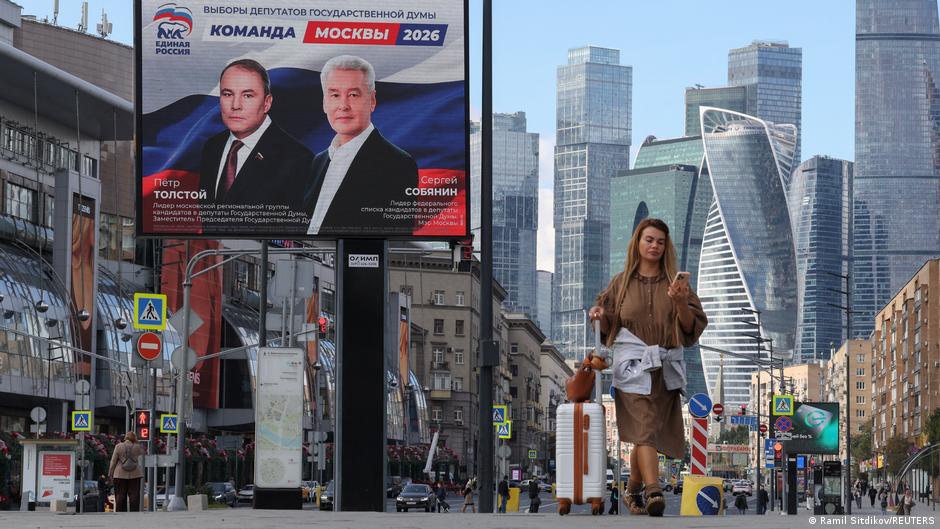
Russia’s ruling United Russia party is on course to strengthen its position in the State Duma, according to figures released by the Central Election Commission after 82.19% of protocols had been processed. The results point to a decisive political advantage for the Kremlin-aligned party and a likely expansion of its parliamentary operating room at a time when Russia’s domestic politics remain tightly managed and heavily scrutinized abroad.
As of the overnight update on Monday, September 21, United Russia had 57.76% of the vote in elections to the ninth convocation of the Russian State Duma, the lower house of parliament. The Communist Party of the Russian Federation was in second place with 13.89%, followed by the Liberal Democratic Party of Russia with 8.77%, New People with 7.97%, and A Just Russia with 4.99%.
The figure for A Just Russia is strategically important because it places the party just below the 5% threshold required to enter the Duma through the party-list vote. If that position holds, the composition of the parliamentary market would become even more concentrated among the parties that clear the barrier, reinforcing United Russia’s dominance and narrowing the space for smaller political actors.
United Russia’s reported 57.76% share compares with 49.82% in the 2021 State Duma election.
Parliamentary Control as Strategic Capacity
For business and policy observers, the headline number is only part of the story. United Russia candidates were also leading in 208 of 225 single-member districts, according to the reported data. That district-level performance suggests the party of power is positioned to secure more than 301 seats, the number required for a constitutional majority in the Duma.
A constitutional majority is more than a symbolic benchmark. In corporate terms, it resembles control of a board with sufficient voting power not only to pass ordinary resolutions but to alter the governing charter. For the executive branch and its allies, such a majority reduces legislative friction, shortens the distance between policy proposal and enactment, and provides a stable platform for decisions that may affect regulation, fiscal priorities, defense spending, state procurement, and the broader investment climate.
That stability can be attractive to state-linked enterprises and companies dependent on predictable access to government programs. It can also heighten concerns among private businesses, foreign investors, and counterparties that policy risk will be shaped less by parliamentary debate than by centralized management decisions. In that environment, strategic planning is increasingly tied to reading signals from the executive and the ruling party rather than tracking a competitive legislative process.
The competitive landscape reflected in the vote count shows a hierarchy familiar in Russian politics. The Communist Party remains the largest formal challenger, but at 13.89% it trails United Russia by a wide margin. The LDPR, with 8.77%, and New People, with 7.97%, occupy smaller but still relevant positions within the managed-party system. A Just Russia’s 4.99% result, if confirmed below the threshold, would raise questions about its future leverage and its ability to convert brand recognition into institutional influence.
Managed Competition and External Reaction
This election also took place across three days and included voting on Ukrainian territories occupied by Russia. That feature is central to how the contest is being assessed internationally and adds geopolitical weight to what would otherwise be treated primarily as a domestic political event. For companies and institutions with exposure to Russia-related risk, the inclusion of occupied territories may further complicate compliance, sanctions analysis, and reputational assessments.
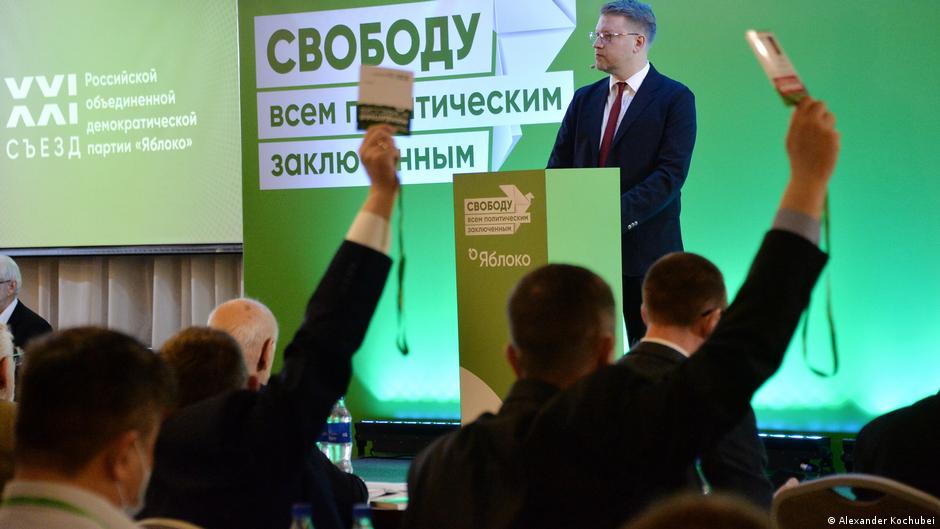
The source article also states that Yabloko, described as the only major party that opposed the war, was removed from the election. That exclusion matters for understanding the political marketplace available to voters and for assessing the range of policy preferences represented in the formal campaign. Without a major anti-war party on the ballot, the contest offered limited institutional space for dissent on Russia’s most consequential policy issue.
Germany and the European Union criticized the parliamentary elections in Russia, pointing to what they described as their staged character and to repression against the opposition. Those reactions are unlikely to alter the domestic arithmetic of the Duma, but they affect the external environment in which Russian state institutions and businesses operate. Political legitimacy, sanctions exposure, and cross-border commercial relationships are all shaped by the way elections are perceived by foreign governments and regulatory authorities.
From a management perspective, United Russia’s expected result would reinforce the current governance model: centralized political control, predictable parliamentary alignment, and limited space for opposition parties to block or meaningfully amend strategic decisions. The party’s apparent gains over its 2021 result of 49.82% suggest not only electoral continuity but an expansion of formal dominance, at least according to the figures released by the election commission at this stage of the count.
The immediate business implication is continuity rather than disruption. Companies operating in or around the Russian market should expect policy direction to remain closely aligned with the priorities of the ruling party and the presidential administration. The larger strategic question is whether a stronger Duma majority accelerates decisions that have already defined Russia’s political economy: deeper state involvement, tighter controls over public life, and a competitive landscape in which political access remains a decisive asset.