Western Governesses Educate Putin’s Alleged Children, Raising Questions on Kremlin’s Private Educational Strategies
Alleged children of Vladimir Putin and Alina Kabaeva receive language education from Western governesses, highlighting a discreet, costly private schooling network.
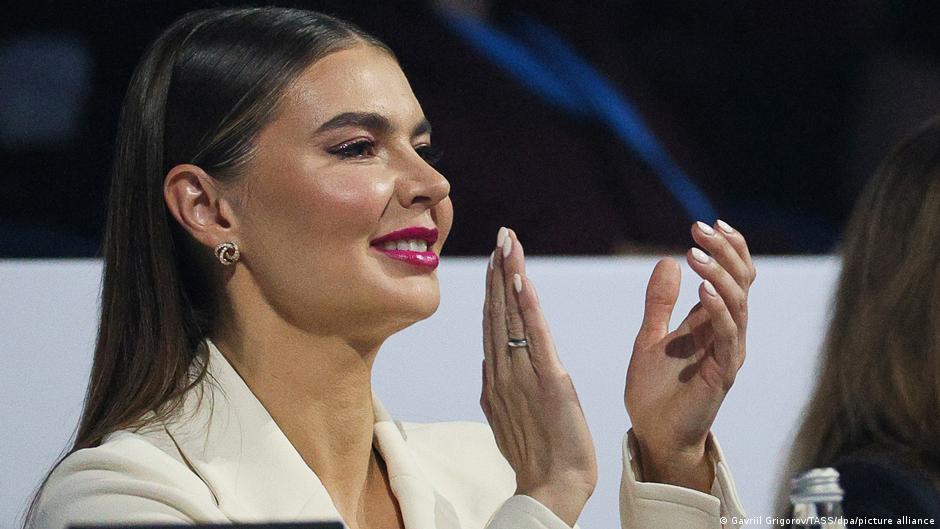
Recent investigative findings reveal that the alleged children of Russian President Vladimir Putin and Olympic champion Alina Kabaeva have been taught foreign languages by governesses from Western countries. This revelation sheds light on the Kremlin’s discreet and expensive approach to the private education of its most closely guarded family members.
Exclusive Foreign Language Tutoring Under a Veil of Secrecy
According to a multi-year investigation, from 2017 through 2026, approximately 20 governesses and tutors from the United Kingdom, New Zealand, Germany, Austria, and Ireland have been engaged in teaching the children foreign languages, particularly German and English. The annual expenditure on these services reportedly reaches into the hundreds of thousands of dollars, with at least 3.5 million rubles (approximately $45,000) paid in January 2026 alone for three governesses.
Official documentation classifies these educators as "leading translators" affiliated with the Institute of Professional Retraining at the International Medical Center "Sogaz." This classification enables them to obtain work visas in Russia under the category of "highly qualified specialists," bypassing more conventional routes for foreign educators.
Interestingly, none of the official paperwork references Vladimir Putin or Alina Kabaeva by name. Instead, the children are referred to only as "wards." A document from 2019 mentions an "Ivan Fedin," raising questions regarding family connections given that Ivan is reportedly the name of the son of one of the coordinators, Olesya Fedina.
"By age four, Ivan must be fully immersed in a ‘language bath,’ with English spoken as a competent European would," instructed Olesya Fedina in 2019 to the governesses, emphasizing the high linguistic standards expected.
The educational management of the children’s language acquisition has reportedly been overseen by Alina Kabaeva’s cousins, Olesya Fedina and Ekaterina Golovacheva. The tutors have reportedly resided alongside the children at the president’s official residence in Valdai, subjecting them to stringent health protocols and restricting any discussion of religious, political, ideological, or LGBTQ+ topics.
Implications for Kremlin’s Private Education and Corporate Governance Culture
This covert educational arrangement highlights several strategic considerations for Russia’s ruling elite. Firstly, it underscores the preference for Western pedagogical expertise to ensure children receive a cosmopolitan, international education that could facilitate future diplomatic or business roles. Secondly, the structuring of employment through a medical center rather than an educational institution suggests a deliberate obfuscation strategy, reflecting a broader culture of secrecy within the Kremlin’s management practices.
Such private education choices are significant in the context of Russia’s political and economic elite, where grooming heirs or successors often involves sophisticated global exposure to languages and culture. The use of foreign educators with stringent controls over their conduct and curriculum content may indicate an effort to balance Western educational standards with Kremlin-approved ideological boundaries.
The decision to employ governesses who must avoid injecting their personal beliefs or controversial topics reflects a highly managed informational environment surrounding the president’s family, mirroring the tightly controlled narrative seen in official Kremlin communications.
Despite inquiries, most involved parties, including the educators and family representatives, declined to comment, maintaining the opacity surrounding this private educational project.
These findings contribute to a deeper understanding of the Kremlin’s internal family strategy and have broader implications for Russia’s elite governance model, where secrecy, strategic international engagement, and controlled exposure are key elements.