US Significantly Scales Back Joint Military Exercises with South Korea Amid Strategic Reassessment
President Trump orders reduction of joint US-South Korea drills, citing costs and diplomatic considerations with North Korea and Seoul's stance on Iran conflict.
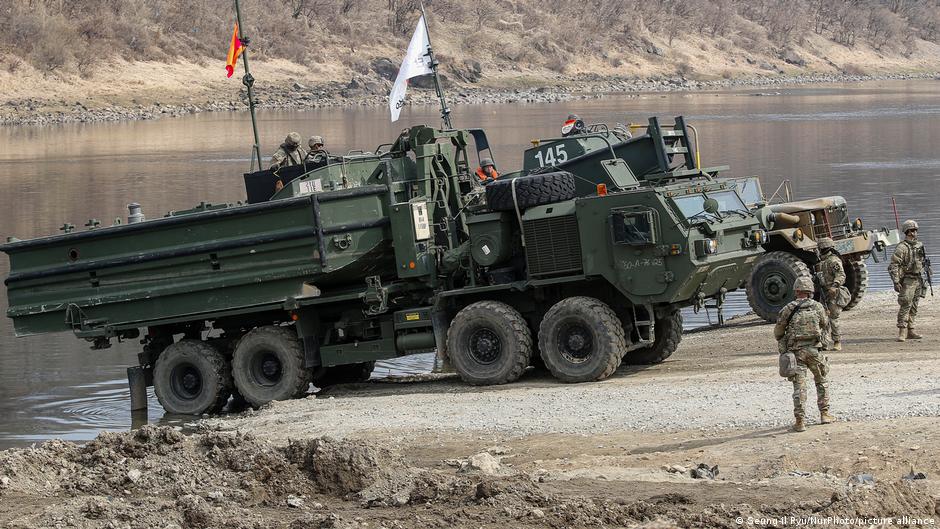
The United States is substantially reducing the scale of its joint military exercises with South Korea, according to an announcement made by President Donald Trump on August 16. This move signals a shift in the US approach to military preparedness on the Korean Peninsula, influenced by broader geopolitical and strategic considerations.
Trump instructed the Secretary of Defense, Mark Esper's successor Pete Hegseth, to cut back on the upcoming joint drills known as Ulchi Freedom Shield, which were scheduled to commence on August 17 and typically span 11 days. These exercises have long been central to the US-South Korea alliance, focusing on readiness for a potential attack from North Korea.
Strategic Rationale Behind the Exercise Reduction
President Trump emphasized in a post on the social media platform Truth Social that the scale of the drills was excessive and financially burdensome, with the majority of costs borne by the United States. He described the exercises as sending an "inappropriate and hostile signal" to North Korea, a country he contends has shown respectful behavior during his administration and does not currently pose a threat.
"These exercises are not only expensive, with the US carrying most of the cost (as usual!), but they also send a completely inappropriate and hostile signal to a country that, as long as I am President, has not represented a threat and has behaved respectfully," Trump wrote.
Beyond cost and diplomatic signaling, Trump’s decision also referenced Seoul’s lack of support for the US and Israeli efforts against Iran, highlighting growing divergences in foreign policy priorities between Washington and Seoul.
Implications for the US-South Korea Alliance and Regional Security
The United States has maintained a military presence of approximately 28,500 troops in South Korea since the Korean War armistice in 1953, underpinning stability in the region. The Ulchi Freedom Shield exercises serve as a key component of deterrence against potential aggression from North Korea, which remains technically at war with the South due to the absence of a formal peace treaty.
South Korean President Yoon Suk-yeol’s administration has recently pursued rapprochement with Pyongyang, seeking to reduce tensions on the peninsula. On August 15, Yoon proposed peace talks to the North Korean government, though no response had been received at the time of reporting.
Reducing joint military exercises could be interpreted as a strategic move to encourage diplomatic engagement between the Koreas, but it also raises concerns about the robustness of the US-South Korea security partnership and deterrence posture against North Korean provocations.
Analysts suggest that trimming the exercises might be a double-edged sword: it could appease North Korea and support diplomatic overtures, but risks diminishing the readiness and cohesion of US and South Korean forces in the event of conflict escalation. The decision underscores a complex balancing act in US defense policy, where military strategy intersects with shifting diplomatic priorities and domestic political considerations.