US Military Strikes Target Iran's Infrastructure Amid Rising Regional Tensions
US forces conduct consecutive strikes on Iranian military and civilian infrastructure, prompting retaliatory measures by Iran's Revolutionary Guards.
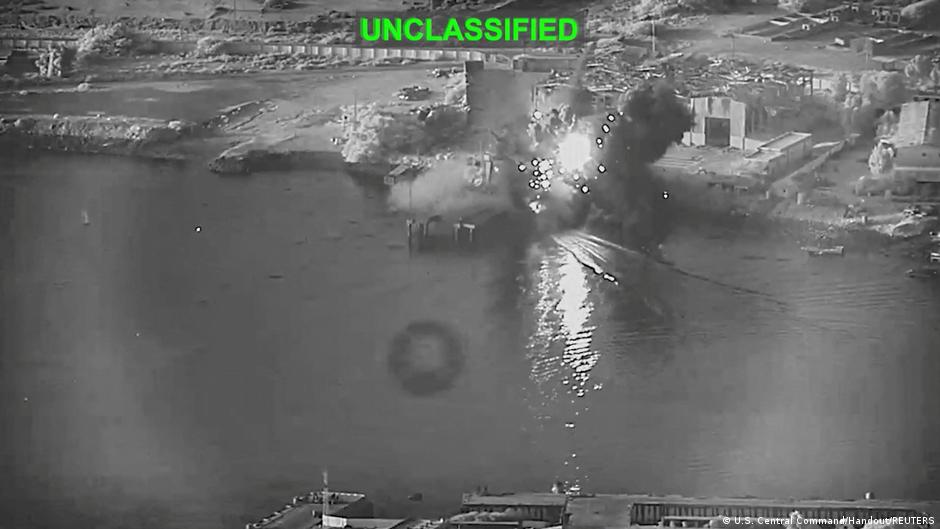
The United States has intensified its military operations against Iran with a new series of strikes aimed at further diminishing Tehran's military capabilities. According to Iranian media reports, these attacks have targeted bridges, airports, and critical energy infrastructure, resulting in casualties.
On the evening of July 16, at 20:00 Berlin time, the US Central Command (CENTCOM) announced the commencement of another wave of attacks on Iranian targets, marking the sixth consecutive night of military assaults. The strikes reportedly began around 21:30 local time in Tehran.
Strategic Objectives and Target Selection
CENTCOM has publicly stated that the purpose of these ongoing strikes is to degrade Iran's military potential further. However, Iranian state media Press TV contested this narrative, claiming that many of the US strikes have struck civilian infrastructure. Among the reported targets are three bridges in Hormozgan Province along the coast, residential areas in the port city of Bandar Abbas, an electrical substation on Kish Island in the Persian Gulf, and zones near the airports of Bandar Abbas and Iranshahr.
Additionally, explosions were reported in the city of Bushehr, home to Iran's only civilian nuclear power plant. Press TV documented a toll of three fatalities and 15 injuries resulting from the recent attacks.
“The series of strikes are intended to erode Iran's military capabilities but have reportedly impacted civilian infrastructure, raising concerns about escalation and humanitarian consequences.”
In response, Iran's Islamic Revolutionary Guard Corps (IRGC), in coordination with the regular military forces, announced retaliatory strikes against American military facilities in the region. Iranian news agency Tasnim reported that unmanned aerial vehicle (UAV) operations targeted US helicopters and reconnaissance aircraft stationed at the Saih al Sidir airbase in Bahrain.
Meanwhile, Kuwaiti military officials confirmed that their air defense systems intercepted incoming Iranian missiles and drones. Bahrain authorities activated civil defense sirens, signaling heightened alert amid the escalating exchanges.
Implications for Regional Stability and Corporate Interests
This escalation follows a framework agreement signed on June 17 between the US and Iran, which aimed to cease hostility and lift the blockade on the strategically vital Strait of Hormuz. However, the fragile agreement unraveled following a kamikaze drone attack by Iran on a civilian tanker transiting the strait on June 25. The US retaliated with targeted strikes against Iranian assets shortly thereafter.
US President Donald Trump publicly declared the memorandum void during the NATO summit in Ankara on July 8 and asserted that the US had effectively taken control of the Strait of Hormuz by July 13. He further pledged that strikes would continue until Iran concedes, threatening additional attacks on Iranian power plants and bridges if a new agreement is not reached.
These developments have significant implications for global energy markets and multinational corporations operating in the region. The repeated attacks on transportation and energy infrastructure risk disrupting supply chains and increasing geopolitical risk premiums. Firms with investments in Persian Gulf logistics, energy production, and shipping may face increased volatility and operational challenges amid the ongoing conflict.
From a strategic standpoint, the sustained US military pressure alongside Iran's retaliatory capabilities signal a precarious balance that could destabilize the broader Middle East region. Multinational companies and investors must monitor these geopolitical dynamics closely given their potential impact on market stability and corporate risk management.