US Military Strikes Iranian Military and Infrastructure Targets Amid Rising Tensions
The US executed multiple airstrikes on key Iranian sites and imposed a renewed maritime blockade, prompting retaliatory attacks on American bases in the Gulf region.
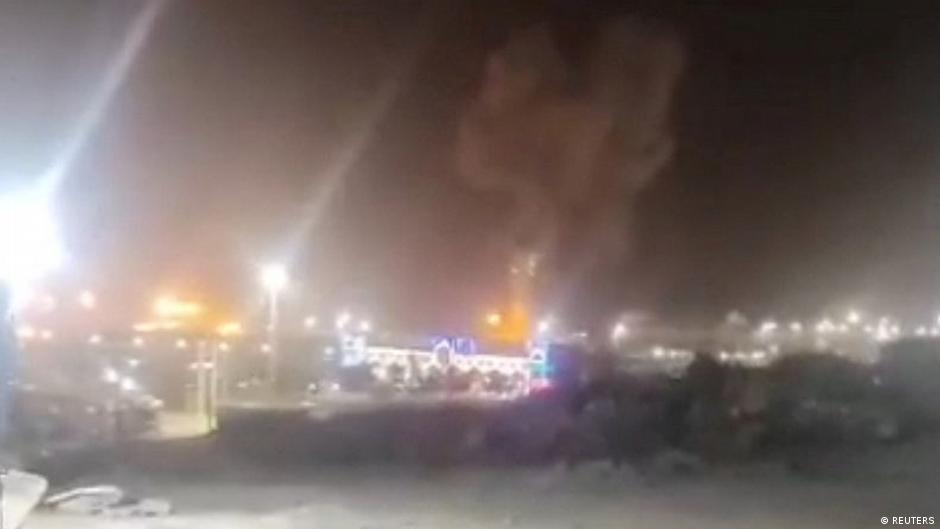
The United States military launched two waves of airstrikes targeting Iranian military and infrastructure facilities on July 16, amid escalating tensions in the Persian Gulf. These operations were followed by retaliatory strikes from Tehran on US bases in Bahrain and Kuwait, marking a significant intensification in hostilities between the two nations.
Strategic US Military Operations Against Iran
The US Central Command (CENTCOM) reported that the initial series of airstrikes targeted port facilities in Sirik, located along the strategic Strait of Hormuz, a critical chokepoint for global oil shipments. Concurrently, three separate air raids were conducted on the major port of Bandar Abbas. Iranian sources further indicated that a fish meal processing plant on Qeshm Island suffered partial damage due to these strikes.
Additional targets included military installations in Ahvaz, Khuzestan Province, as well as explosions reported in Rasak and the port of Kenarak within the provinces of Sistan and Baluchestan. These actions suggest a US strategy focused on undermining Iran's logistical and military capabilities along key maritime and coastal hubs.
"The second wave of strikes focused on Iranian command centers, air defense infrastructure, missile and drone systems, alongside coastal surveillance installations to diminish Iran's threat to commercial maritime operations," CENTCOM stated.
The second wave of airstrikes aimed to degrade Iran's command and control capacity, particularly its air defense systems and missile and unmanned aerial vehicle (UAV) platforms. This approach intends to reduce Iran's ability to threaten merchant vessels operating in the region, highlighting the US objective to control maritime security in the Persian Gulf.
Renewed Maritime Blockade and Targeting of a Commercial Tanker
In a related operation, US forces targeted an unmanned oil tanker, M/T Belma, flying the flag of Curaçao, which attempted to breach the US-imposed maritime blockade by approaching an Iranian port. After ignoring warnings, the vessel was disabled by US Hellfire missiles fired into its smokestack, effectively neutralizing the threat without reported casualties.
The blockade, reinstated on July 14, controls maritime traffic to and from Iranian ports, with CENTCOM reporting redirection of two commercial vessels and use of force against one within 24 hours of enforcement. This blockade underscores the US's strategic use of economic pressure in conjunction with military actions to constrain Iran's international trade and military logistics.
Iranian Retaliation and Regional Security Impact
In response, Iran launched attacks on US military bases in Bahrain and Kuwait. Reports from Iranian media indicated at least ten explosions at the US Navy's Fifth Fleet headquarters in Bahrain and additional blasts at a US base in Kuwait. These attacks prompted partial airspace closures in Saudi Arabia and Jordan, reflecting heightened regional instability.
Furthermore, Iran’s Islamic Revolutionary Guard Corps (IRGC) air defense units reportedly shot down a US MQ-9 drone, indicating ongoing aerial engagements between the two countries.
US Diplomatic and Economic Strategy
Despite the military escalation, US Vice President J.D. Vance expressed cautious optimism regarding the overall US approach toward Iran. Speaking on The Joe Rogan Experience podcast, he acknowledged the complexity and unpredictability of the situation but emphasized that the US is pursuing a multi-faceted strategy combining economic sanctions and diplomatic engagement with pragmatic Iranian leaders.
Vance stated, "I don't know exactly where this will lead, but fundamentally I believe we are moving in the right direction. This process will be very complex, with numerous pauses and resumptions." His comments reflect the administration’s intent to balance pressure and dialogue to influence Iran’s behavior while maintaining regional security.
Implications for Corporate and Regional Stakeholders
The renewed US military actions and maritime blockade have significant implications for global energy markets, shipping lanes, and regional security dynamics. Companies operating in maritime logistics, oil and gas sectors, and insurance markets must closely monitor these developments. The US strategy underscores a willingness to escalate military pressure to enforce economic sanctions, potentially disrupting supply chains and raising insurance premiums for vessels transiting the Strait of Hormuz.
Additionally, Iran's retaliatory capabilities and the involvement of regional actors such as Saudi Arabia and Jordan signal increased risks of broader conflict, which may influence corporate risk assessments and investment decisions in the Middle East.
In summary, the US military strikes and naval blockade, compounded by Iran’s counterattacks, highlight a strategic contest with significant consequences for regional stability and international commerce. Stakeholders in global trade and energy sectors will need to adapt to an evolving security environment where military actions and economic sanctions converge.