US Launches $100 Million Humanitarian Aid to Cuba Amid Heightened Sanctions and Strategic Pressure
The US initiates a substantial humanitarian aid package to Cuba while maintaining strict sanctions on state-linked enterprises.
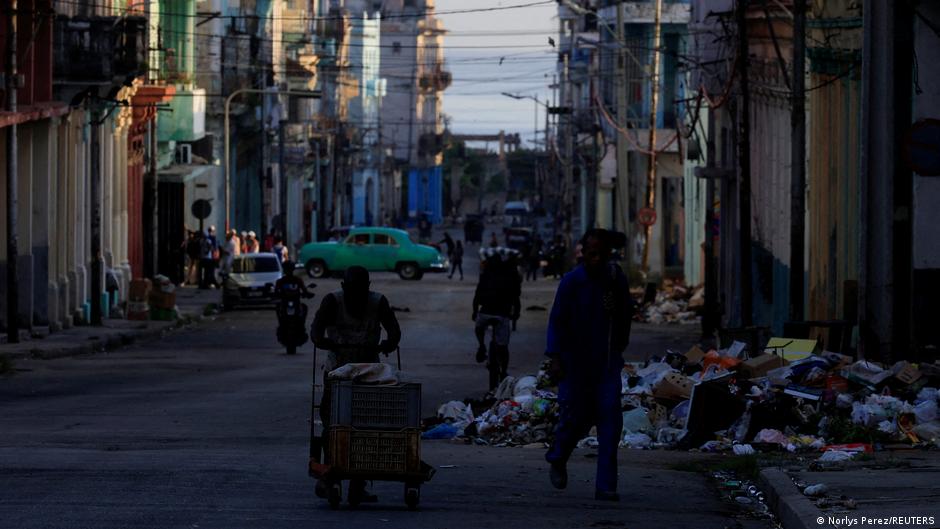
In a complex and multifaceted approach to Cuba, the United States has dispatched the first plane carrying humanitarian aid as part of a newly announced $100 million assistance package. This move occurs against the backdrop of escalating financial sanctions targeting Cuban state-owned companies and growing speculation about potential military actions.
Humanitarian Aid Amid Strategic Tensions
The US State Department confirmed on July 21 that the initial shipment includes essential food supplies and hygiene kits intended to directly support approximately 700 Cuban families. Distribution will be managed through Catholic Relief Services, a humanitarian organization previously engaged by Washington to deliver aid following Hurricane Melissa, which caused significant damage to parts of the island.
"The goal of this humanitarian mission is to support the Cuban population while the US government intensifies pressure on Cuba's current administration through sanctions and supply restrictions," noted the package's announcement earlier in May by US Secretary of State Marco Rubio.
Despite initial skepticism from Cuban authorities—who accused the US of causing power outages and artificial shortages—there appears to have been a tacit acceptance of the aid following diplomatic negotiations between Havana and representatives of the Trump administration.
Sanctions Targeting GAESA and Strategic Cuban Entities
The aid delivery coincides with a stringent new round of sanctions imposed on five Cuban companies, three of which are linked to Grupo de Administración Empresarial S.A. (GAESA), the military-controlled conglomerate dominating roughly 40% of Cuba's GDP. As of early 2024, GAESA reportedly held liquid reserves estimated at $14.5 billion.
Additional sanctions target the spouse of Alejandro Castro, head of Cuba's National Security Council and son of former leader Raúl Castro. Cuban Foreign Minister Bruno Rodríguez has condemned these measures as "relentless aggression and collective punishment," branding Senator Rubio, himself a son of Cuban immigrants, as "dishonest and deceitful."
Military Contingencies and Strategic Posturing
Concurrently, defense officials have reportedly explored several military scenarios, including deploying thousands of troops from the 101st Airborne Division to the island. While no final decision has been made, these plans underscore the Pentagon's consideration of forceful options amidst rising tensions.
Defense Secretary Peter Hegseth has suggested that Cuba's acquisition of over 300 unmanned aerial vehicles (UAVs) capable of striking the US base at Guantanamo Bay, naval assets, and Florida territory could provoke a confrontation. However, sources close to CBS News view an imminent military operation as unlikely given US entanglements in conflicts involving Iran and Israel, as well as the Trump administration's preference for economic and diplomatic leverage.
Implications for Cuba’s Economic and Political Landscape
This dual strategy—combining humanitarian aid with severe economic sanctions and military threat posturing—reflects a nuanced US approach to influencing Cuba's political and economic systems. The focus on GAESA targets the financial heart of Cuba’s military-business complex, while aid efforts aim to mitigate civilian hardship, potentially softening public perception of US intentions.
Experts suggest this approach may be designed to create internal pressures within Cuba by weakening the regime’s economic foundations while maintaining international support by addressing humanitarian concerns. The strategic deployment of aid through trusted non-governmental organizations also reduces the risk of empowering the Cuban government directly.
As these developments unfold, the intersection of corporate control, military strategy, and diplomatic maneuvering will be critical to watch in understanding US-Cuban relations and their broader regional implications.