US Government Launches Limited Edition Passports Featuring President Trump for 250th Independence Anniversary
Washington to issue special passports with Donald Trump's portrait as part of strategic branding for US independence bicentennial.
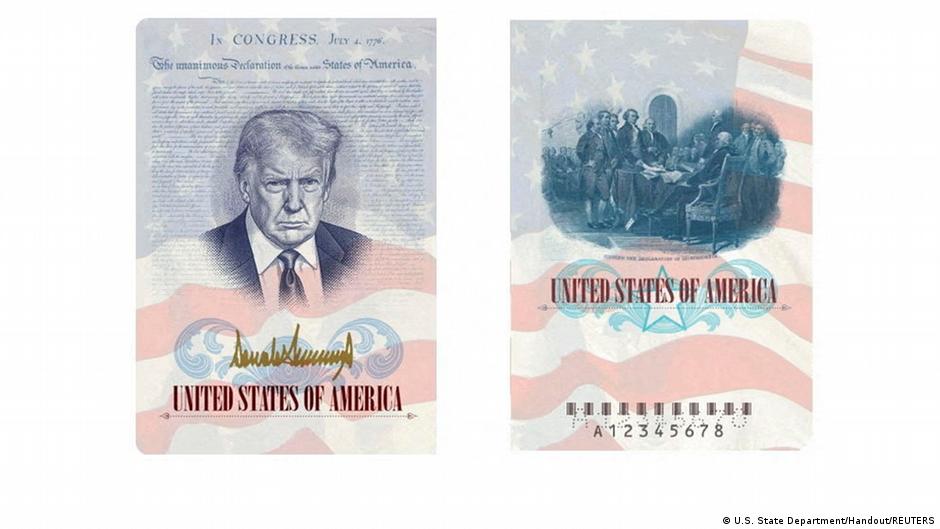
In a distinctive move aligning corporate branding strategies with national symbolism, the United States government has announced the issuance of a limited series of passports featuring the portrait of current President Donald Trump. This initiative coincides with the country's 250th anniversary of independence and aims to reinforce the administration's visibility in federal documentation.
Strategic Branding and Leadership Symbolism
The Department of State revealed that these passports will be distributed primarily through its Washington, D.C. office. The exact volume of passports to be issued remains undisclosed, but the release marks a pivotal intersection of political messaging and federal identity management.
Unlike the standard US passport, which displays the artwork of Edward Percy Moran depicting key American historical moments, the new edition integrates Trump's image and signature in gold lettering on the inside of the front cover. The back cover features a segment from John Trumbull's famed painting, "Declaration of Independence," further linking the document to the nation's foundational narrative.
“This initiative represents a concerted effort to embed the current administration’s identity within key governmental artifacts, enhancing both visibility and legacy.”
Meanwhile, passports obtained through online channels or other regional offices will maintain the conventional design, reflecting a targeted approach to the distribution of these commemorative documents.
Complementary Corporate and National Identity Moves
This passport issuance is part of a broader strategy under President Trump's administration to consolidate his image within national symbols. Earlier announcements include the replacement of the US Treasury Secretary's signature with Trump's on the $100 bill, a move unprecedented in 165 years, timed with the 250-year anniversary celebrations.
Moreover, the US Commission of Fine Arts has approved the minting of a 24-carat gold coin bearing Trump's likeness, emblazoned with the word "Liberty," further entrenching his association with the concept of American freedom. Notably, in October 2025, the administration replaced all commission members with individuals loyal to the president, signaling a decisive reshaping of federal cultural institutions to align with executive priorities.
Additional rebranding efforts include the renaming of the US Institute of Peace after Trump and the renaming of the John F. Kennedy Center for the Performing Arts to include Trump’s name alongside Kennedy’s. These moves underscore a comprehensive strategy of legacy-building through symbolic capital.
Furthermore, plans for the Navy to develop two new warship classes named "Trump," equipped with advanced weaponry, indicate an extension of personal branding into military assets, signaling a bold fusion of leadership identity with national defense strategy.
Implications for Corporate Governance and Competitive Positioning
These initiatives highlight a unique intersection of government, branding, and legacy management, reflecting a corporate-style approach to governance. By leveraging state-issued instruments and cultural institutions, the administration is consolidating its competitive position not only politically but also within the national narrative and public perception.
From a strategic perspective, these measures may influence public trust, institutional alignment, and international image, offering valuable case studies in executive decision-making and state branding tactics.