Oleshky Truce Tests Execution of a High-Risk Humanitarian Operation
The temporary ceasefire creates a narrow window for aid and evacuations while exposing the operational risks facing all parties.
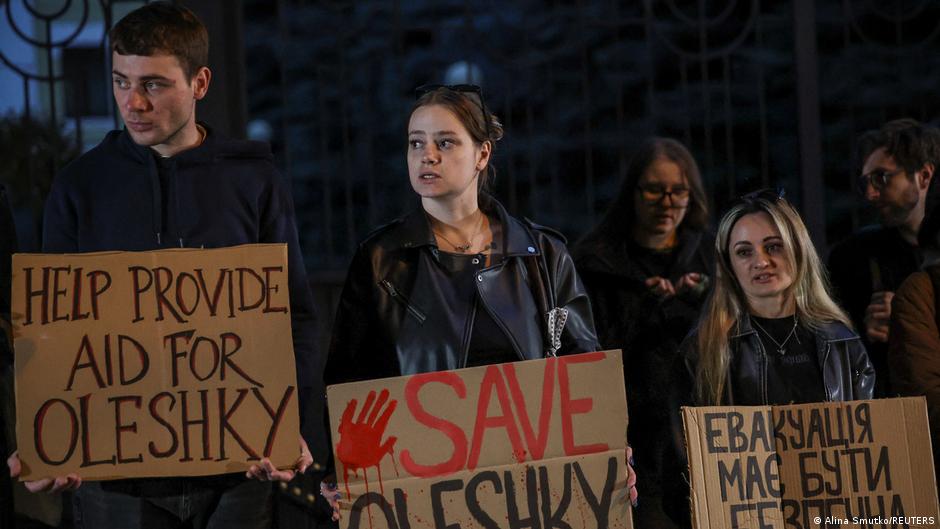
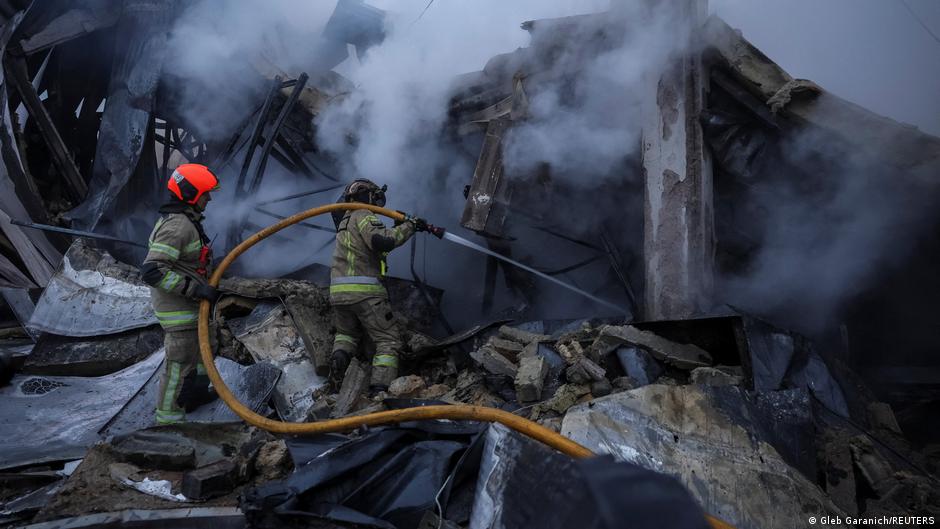
A bilateral ceasefire took effect at 03:00 Kyiv time on October 27 around Oleshky, an occupied city in Ukraine’s Kherson region, according to the General Staff of the Armed Forces of Ukraine and Russia’s Defense Ministry. The pause is intended to enable a humanitarian operation in a heavily mined area where an estimated 1,700 to 2,000 residents remain.
Russia’s Defense Ministry said its forces had stopped firing on the Kherson front and introduced a “regime of silence” from 04:00 Moscow time. Ukraine’s General Staff said its ceasefire applied to a defined area and was established exclusively to deliver assistance, prepare the free movement of civilians from Oleshky and protect residents during the operation.
For the organizations and governments involved, the agreement presents an unusually complex execution challenge. It requires military forces to suspend activity, civilian representatives from both countries to identify residents’ needs, engineers to address mined roads, transport providers to move evacuees and outside observers to document events. Any failure in one part of that chain could undermine the wider operation.
A Narrow Window With Multiple Decision Makers
Ukrainian President Volodymyr Zelensky said the ceasefire would begin on October 27 and the humanitarian mission would take effect on October 29. Under the arrangement, Russia is expected to clear mines from roads, while Ukraine is preparing to evacuate residents who have been trapped in the city.
Zelensky said the temporary truce, announced by Washington on October 23, was achieved with mediation by US first lady Melania Trump. The White House said Moscow and Kyiv would stop firing to permit humanitarian aid deliveries and prepare the evacuation of civilians through a specially organized safe corridor. Its statement indicated that the US first lady’s team played a central role in securing the agreement.
The involvement of several governments creates both coordination capacity and management risk. Responsibilities are divided across parties that remain at war and fundamentally distrust one another. The arrangement’s viability therefore depends less on strategic alignment than on tightly defined tasks: maintaining the ceasefire, clearing agreed routes, verifying civilian preferences and providing transport to selected destinations.
Melania Trump said civilian representatives of Russia and Ukraine would jointly visit Oleshky residents in their homes to determine what assistance they need. Residents choosing to evacuate would receive support and transportation to the destination of their choice.
“I believe some will want to go to Russia, and some to Ukraine,” the White House statement quoted her as saying.
Employees of an independent American media organization will accompany the representatives and document the visits, according to the first lady. That monitoring function could be significant because information control is one of the operation’s most sensitive competitive dimensions.
Reputational Risk Alongside Physical Danger
Zelensky warned of a high risk that the Russian military could take steps intended to discredit the process. He said Moscow might try to persuade residents to move to the Russian side and use the evacuation to produce propaganda material. Ukraine’s priority, he stressed, is to save trapped residents and help them reach Ukrainian-controlled territory.
Those concerns show that the mission is not only a logistical undertaking but also a contest over credibility. Joint home visits and independent documentation appear designed to provide safeguards around residents’ choices, although the source provides no further detail on the media organization or the verification process.
Oleshky, known in Russian as Alyoshki, is a small city on the Russian-occupied eastern bank of the Dnipro River. About 24,000 people lived there before Russia’s full-scale war against Ukraine. Current estimates indicate that 1,700 to 2,000 residents remain, including at least several dozen children.
The city was almost completely flooded after Russia destroyed the Kakhovka Hydroelectric Power Plant in June 2023. The flooding caused further damage to infrastructure and access to drinking water. Oleshky has also been under blockade for the past several months.
Although Ukrainian-controlled Kherson is only nine kilometers away, the surrounding territory is covered with mines, making departure in any direction potentially deadly. The short geographic distance therefore understates the operational difficulty and cost of establishing a functioning evacuation route.
Ukrainian forces previously reported delivering food and medicine with heavy drones, while Moscow also said it had supplied the city. Pope Leo XIV was among those who appealed to the Russian president for a ceasefire in Oleshky.
The operation will now test whether a narrowly negotiated agreement can be converted into safe movement on the ground. Its immediate performance indicators are clear: sustained silence from weapons, usable roads, delivery of aid and voluntary transport for civilians. Beyond those outcomes, the mission may demonstrate whether third-party mediation and independent observation can support limited humanitarian coordination between two belligerents without resolving their broader conflict.