Kyiv Missile Strike Highlights Rising Risks to Urban Operations
Attacks on Kyiv and Kharkiv killed at least three people, damaged homes and disrupted sites near critical public infrastructure.
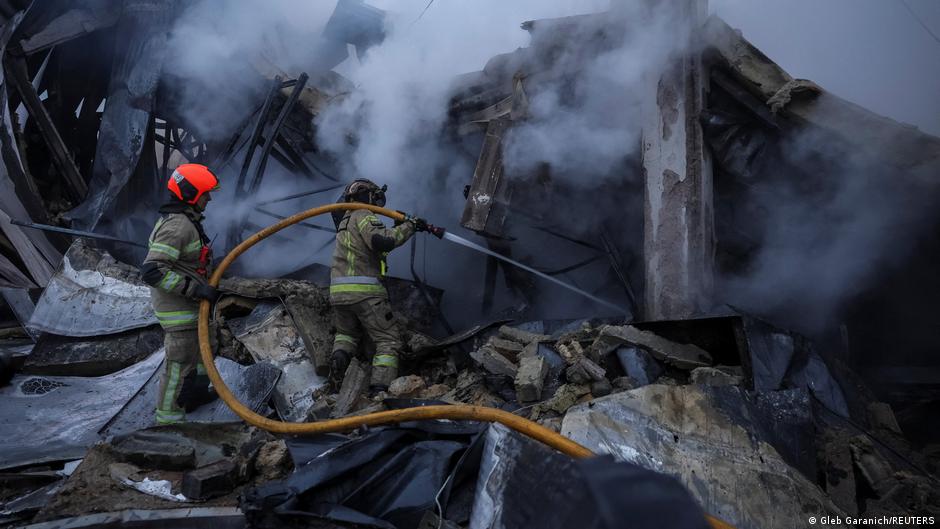
Russian forces launched a series of missile strikes on Kyiv on the evening of October 26, killing at least one person and injuring no fewer than 10, according to Ukrainian authorities. Nine of the wounded were hospitalized, with three reported to be in serious condition.
The attack, involving ballistic missiles reportedly launched from Bryansk, struck multiple locations across the Ukrainian capital. The damage reported near a metro station, a university dormitory, residential property and a medical facility underscores the growing operational risks facing organizations that depend on Kyiv’s transport, housing, education and healthcare infrastructure.
Kyiv Mayor Vitali Klitschko reported the casualty figures at about 11 p.m. local time on Telegram. Earlier messages from the mayor described strikes in two city districts: Desnianskyi and Dniprovskyi. Authorities were continuing to assess the consequences while the attack remained underway.
Damage Spans Residential and Institutional Areas
In the Desnianskyi district, a missile hit an area close to one of Kyiv’s metro stations and near a dormitory belonging to a university, Klitschko said. The Kyiv City Military Administration separately reported that a residential building had been damaged in the same district.
Preliminary information indicated that people could be trapped inside the building. Officials had not provided a confirmed number of those potentially blocked in the property at the time of publication.
In the Dniprovskyi district, a strike hit a building situated within a non-residential development. Windows were also blown out in two departments of a medical institution in the district. According to the mayor, neither patients nor medical personnel were injured there.
The combination of residential, transport-adjacent, educational and medical locations affected by the strikes illustrates the broad exposure of urban institutions during continuing attacks. Even where direct casualties are avoided, damage to windows, buildings and nearby infrastructure can force managers to review access, staffing, continuity procedures and the safety of employees, residents and service users.
The authorities did not provide estimates of the financial cost of the damage, the extent of any interruption to metro services, or the operational status of the university dormitory and the affected medical departments. Other consequences were still being clarified.
“Medical teams hospitalized nine of the injured; three of them are in serious condition,” Klitschko said in his account of the attack.
Continuing Attack Complicates Emergency Response
At the time the initial reports were published, the assault on Kyiv was continuing, including with the use of jet-powered drones. The ongoing threat added uncertainty to rescue operations and the assessment of damaged sites.
For city authorities and institutional managers, an extended attack creates overlapping challenges. Emergency workers must reach affected buildings while further strikes remain possible, hospitals must maintain services while protecting patients, and organizations near impact sites must account for personnel and determine whether facilities remain safe to occupy.
The reported possibility that people were trapped inside a damaged residential building made the immediate priority a search-and-rescue operation. The serious condition of three hospitalized casualties also placed attention on Kyiv’s emergency medical capacity, although officials did not report injuries among staff or patients at the medical facility where windows were broken.
Kharkiv Reports Fatalities and Property Damage
Russian forces also attacked Kharkiv several hours before the strikes on Kyiv. Kharkiv Mayor Ihor Terekhov said two people had been killed and four injured in shelling of the city’s Novobavarskyi district.
“As a result of the shelling of the Novobavarskyi district, two people have already been killed and four injured. Apartment buildings and private homes, as well as vehicles, were damaged,” Terekhov wrote on Telegram.
The reported damage in Kharkiv affected both multi-apartment and private residential buildings, along with vehicles. No monetary estimate or detailed account of the scale of property losses was available in the initial report.
Taken together, the attacks left at least three people dead across Kyiv and Kharkiv, with at least 14 others injured based on the figures released by the two mayors. Three of those wounded in Kyiv were in serious condition. The totals remained subject to revision as authorities continued examining damaged buildings and responding to the ongoing assault.
For businesses and public institutions operating in Ukraine’s largest cities, the latest strikes reinforce a strategic environment in which physical security and continuity planning remain central management concerns. The locations affected in Kyiv show that exposure extends beyond conventional commercial premises to the transport links, accommodation, healthcare services and educational facilities on which urban organizations and their workforces rely.