US Considers Declaring Strait of Hormuz as American Territory Amidst Strategic Control Efforts
President Trump signals intent to assert US territorial claims over the Strait of Hormuz, implying long-term military presence despite regional tensions.
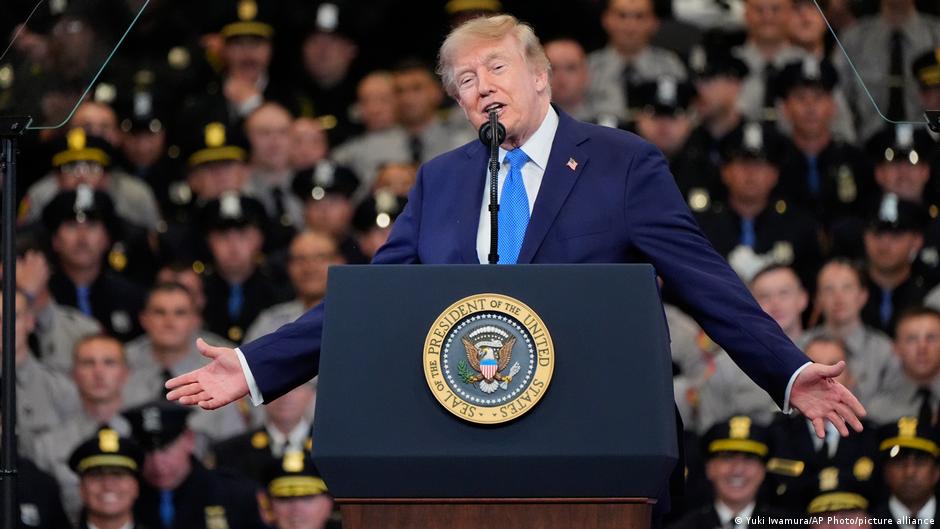
In a significant and provocative statement on August 15, President Donald Trump announced plans to declare the Strait of Hormuz as American territory following what he described as a "final victory" over Iran. This strategic waterway, crucial for global oil shipments, has become a focal point of US-Iran tensions, with both nations asserting control over navigation in the region.
Strategic and Corporate Implications of Control Over the Strait of Hormuz
The Strait of Hormuz is a vital chokepoint through which a substantial portion of the world's oil supply transits. Control over this passage grants significant leverage in global energy markets, impacting pricing, supply security, and geopolitical stability. President Trump's assertion of territorial claims suggests a potential shift in US policy towards indefinite military deployment in the region, raising questions about the long-term costs and strategic benefits for the United States.
"Currently, American forces control the waterway, blocking ports in the Islamic Republic," Trump stated, underscoring the US military's active role in restricting Iranian maritime activities.
This approach contrasts with previous assurances by the Trump administration indicating a preference for a short-term conflict with Iran. The move to establish permanent control aligns with other territorial ambitions expressed by President Trump, including attempts to integrate Greenland and the Panama Canal into US influence, and prior references to Venezuela as a potential "51st state."
Iranian officials have firmly rejected the US claims. Deputy Foreign Minister Qasem Garibabadi emphasized Iran's refusal to succumb to American threats or displays of force. The Iranian government continues to assert its own control over the Strait, highlighting the contested nature of this critical maritime route.
From a business perspective, the ongoing blockade and disputes have led to a sustained reduction in global oil reserves, exacerbating supply chain uncertainties. Iran's recent demands for the lifting of sanctions and compensation for conflict-related damages illustrate the high stakes involved in negotiations over the Strait's status and access.
President Trump's statements also referenced recent US military operations aimed at clearing mines from the Strait, reinforcing the narrative of American dominance in the area. However, the efficacy of intensified economic sanctions versus direct military action remains a debated strategy within US policymaking circles.
For corporations engaged in energy, shipping, and regional trade, the potential for a permanent US military presence in the Strait of Hormuz signals a volatile environment with both risks and opportunities. Firms must navigate heightened geopolitical uncertainty, supply disruption risks, and shifting regulatory landscapes influenced by international sanctions and military activity.
In conclusion, the assertion of territorial claims over the Strait of Hormuz by the United States marks a critical juncture in the complex interplay of military strategy, corporate interests, and global energy security. Stakeholders in the business community should closely monitor developments as they could reshape the competitive landscape and prompt reassessments of investment and operational strategies in the Middle East.