UN Peacekeeping Forces Shrink to 25-Year Low Amid Funding and Geopolitical Challenges
UN peacekeeping personnel numbers fell sharply in 2025 due to financial shortfalls and geopolitical tensions, raising concerns over multilateral conflict resolution efforts.
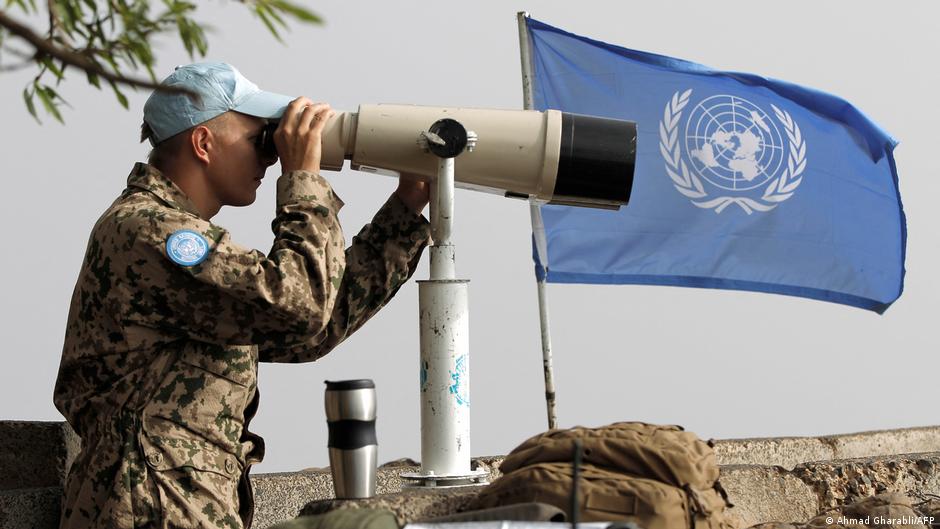
At the close of 2025, the global deployment of United Nations peacekeeping personnel reached its lowest level in 25 years, underscoring significant challenges facing the organization's conflict management efforts. This development, detailed in a recent report by the Stockholm International Peace Research Institute (SIPRI), highlights the compounded effects of geopolitical tensions, political pressures, and chronic financing difficulties on the UN's peacekeeping operations.
Steep Personnel Decline Amid Geopolitical Strains and Budget Crises
According to SIPRI data, 78,633 international peacekeepers were active worldwide as of December 31, 2025. This figure represents a 49% decrease compared to 2016 and marks the lowest deployment since 2000. While a downward trend in peacekeeping personnel has persisted over the past decade, 2025 saw an unprecedented annual reduction of 17%, revealing an accelerated contraction in capacity.
“If this trajectory continues, we will witness a dramatic weakening of multilateral conflict resolution efforts and a near-total erosion of the significance of institutions like the UN due to funding crises and geopolitical factors,” said Yair Van Der Leyn, director of SIPRI’s peacekeeping and conflict resolution program.
Van Der Leyn warns that the decline in peacekeeping capabilities could lead to an increase in conflicts with potentially severe consequences for civilian populations, as states move away from established norms of international engagement.
Operational Footprint and Regional Concentration
In 2025, the UN conducted 58 peacekeeping operations across 34 countries or territories, down by four missions from the previous year. Notably, the UN did not renew the mandate for the mission in Nagorno-Karabakh. Regionally, Sub-Saharan Africa and Europe hosted a combined total of 18 operations, the Middle East and North Africa 14, the Americas 5, and Asia and Oceania 3. Approximately 73% of peacekeepers were concentrated in just five operations, four of which were based in Sub-Saharan Africa.
Funding Shortfalls and Political Gridlock
SIPRI’s report emphasizes a deep funding crisis as a central factor hampering peacekeeping missions. Major donor countries either delayed or failed to fulfill their financial commitments, resulting in a $2 billion shortfall for UN peacekeeping operations in July 2025 alone. This gap equated to 35% of the budget for the 2024-2025 period, forcing the UN to substantially reduce personnel across multiple missions.
Political complications further exacerbated operational challenges. Permanent members of the UN Security Council imposed veto threats and strict conditions that hindered mandate renewals. For example, despite repeated ceasefire violations between Israel and Lebanon in 2024, the United States pushed to end the UN Interim Force in Lebanon (UNIFIL) during 2025 mandate renewal negotiations, culminating in a final extension only until December 2026.
Regional Actors and the Limits of Alternative Peacekeeping Models
Since 2014, no new UN peacekeeping mandates have been authorized, leading to increased reliance on regional organizations such as the African Union, ECOWAS, and the OSCE. However, these bodies have faced similar funding constraints and decision-making delays—especially evident in conflict zones like Sudan and Ukraine—due to geopolitical rivalries.
Claudia Pfeifer Cruz, senior researcher at SIPRI, noted, “Regional organizations lack key capabilities for integrated peacekeeping and suffer from funding shortages and negotiation challenges similar to those faced by the UN. As UN-led conflict resolution efforts lose traction, a widening gap emerges that alternative models cannot fill.”
Outlook and Strategic Implications for Multilateral Peacekeeping
Despite these setbacks, international support for peacekeeping operations remains broadly stable. Over 130 UN member states participated in the May 2025 Peacekeeping Ministerial in Berlin, reflecting ongoing commitment at the political level.
However, SIPRI experts stress that political declarations must translate into reliable financing and a solid political framework to sustain effective multilateral peacekeeping. Pfeifer Cruz emphasized, “The collapse of the multilateral crisis management system is not inevitable. States must move beyond rhetoric to ensure predictable funding and create conditions that enable successful peacekeeping missions.”
This situation presents a critical juncture for UN peacekeeping strategy. The organization must reconcile geopolitical complexities with financial realities while adapting its operational model to preserve its role in global conflict resolution. The current contraction challenges the UN's strategic positioning and may prompt reassessment of peacekeeping’s future in international security architecture.