Ukraine Reports Strike on Russian Navy Vessels in Novorossiysk, Impacting Military and Commercial Assets
Ukrainian forces claim to have damaged key Russian naval assets, including missile-equipped frigates, affecting both military capabilities and regional infrastructure.
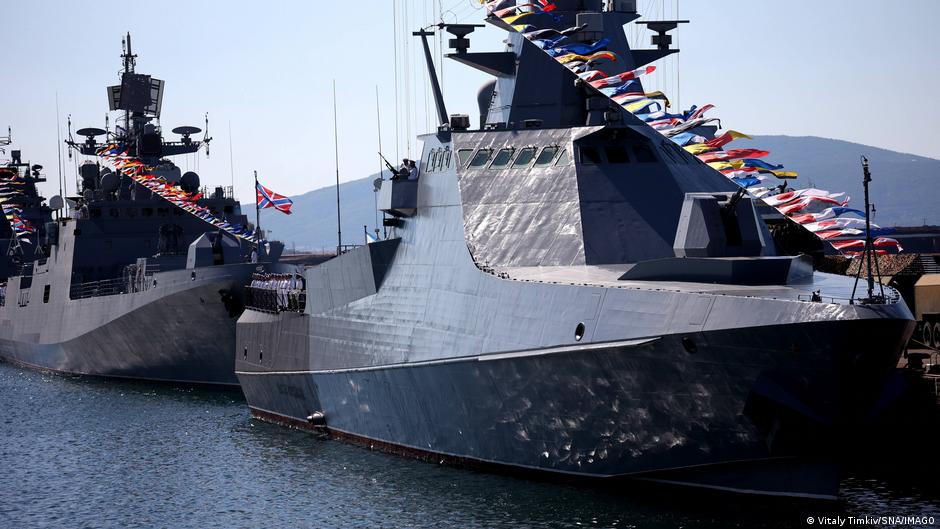
On August 12, the General Staff of the Armed Forces of Ukraine and the Security Service of Ukraine (SBU) announced a successful strike on Russian naval assets stationed in Novorossiysk. The attack reportedly inflicted varying degrees of damage on four Russian Navy vessels, including two missile-capable frigates, the Admiral Essen and Admiral Makarov. This development marks a significant escalation in the ongoing conflict, with implications for Russia's naval operational capacity in the Black Sea region.
Strategic and Tactical Dimensions of the Attack
The Ukrainian military's statement highlights that the affected vessels include two frigates armed with "Kalibr" cruise missiles, which Russia has used in attacks across Ukrainian territory. Alongside these, a small missile ship Buyan-M and the patrol ship Vasily Bykov were also reported damaged. However, Ukrainian authorities notably omitted confirmation of any damage to the Buyan-M in subsequent statements.
"Ukrainian drones, Palyanitsa reactive drones, Neptune missiles, and strike systems launched from our naval platforms precisely engaged the designated targets," the SBU stated, emphasizing the coordinated use of advanced military technologies.
In addition to military assets, the strike reportedly affected several critical infrastructure points in Novorossiysk. These include a radar station linked to the S-300 surface-to-air missile system, the Grushovaya oil depot, a mobile fire group, and the infrastructure servicing three docks. The Grushovaya depot, connected via pipelines to the Sheskharis marine terminal—a key endpoint for Transneft’s main oil pipelines in the Krasnodar region—had previously experienced a fire incident on June 8, raising concerns about its vulnerability to further disruption.
Commercial facilities were also targeted. According to independent reports, the Novorossiysk Grain Terminal and the Novorossiysk Bread Products Plant (PAO NKHP) sustained damage that forced operations to cease. The grain terminal, part of PAO NKHP’s assets, plays a vital role in regional agricultural exports, making its incapacitation a significant blow to commercial logistics as well as Russia's broader economic interests.
The regional governor of Krasnodar Krai, Veniamin Kondratyev, reported casualties resulting from the strike, with three fatalities and 24 injured. Additionally, approximately 60 residential buildings in Novorossiysk were damaged. Debris from unmanned aerial vehicles (UAVs) also impacted properties in neighboring cities such as Gelendzhik, Anapa, and Temryuksky District. Regional authorities cited the launch of "hundreds" of drones across the area, indicating a large-scale coordinated aerial assault.
Business and Security Implications
The attack on both naval vessels and key logistical nodes highlights a multi-faceted strategy aimed at undermining Russia's military presence and economic stability in the Black Sea region. The damage to missile-equipped frigates potentially weakens Russia’s strike capabilities and naval deterrence, while disruption to oil and grain infrastructure affects critical supply chains and export revenues.
From a corporate strategy perspective, the vulnerability of pivotal assets such as the Grushovaya oil depot and Novorossiysk’s grain terminals underscores the risks companies face amid geopolitical conflict. The interdependence between military targets and commercial infrastructure complicates operational continuity and risk management for Russian state-owned enterprises and private firms alike.
Moreover, these events may prompt Russian management teams and policymakers to reassess security protocols, asset dispersion strategies, and contingency planning to mitigate future disruptions. The attack also intensifies pressure on Russia's defense industries to innovate in naval protection and counter-UAV technologies to safeguard high-value assets.
"The multifront nature of this strike demonstrates a sophisticated integration of drone warfare and missile strikes aimed at both military and economic targets," analysts note, indicating a shift in conflict dynamics with broader implications for corporate and regional security frameworks.
In conclusion, the reported Ukrainian strike on Novorossiysk represents a significant operational challenge to Russian naval and commercial capabilities. The incident underscores the increasing complexity of contemporary warfare where corporate assets and infrastructure become strategic targets, necessitating agile and robust management responses within the intersecting spheres of business and defense.