Spain Faces Migrant Surge in Ceuta, Prompting Military Deployment and Regional Border Controls
Spanish PM Pedro Sánchez labels the mass migrant influx into Ceuta as an attack, while Spain and Italy adjust border policies amid regional tensions.
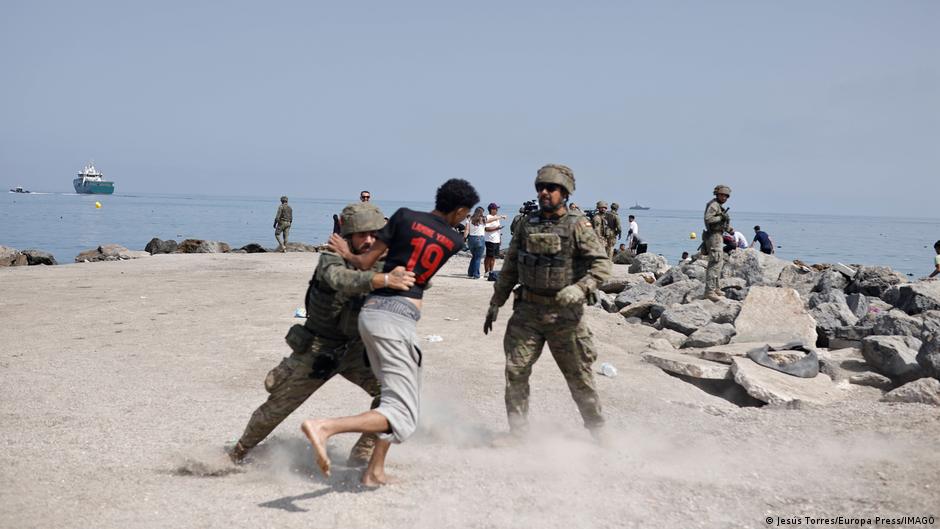
Spain is currently grappling with an unprecedented influx of approximately 60,000 migrants into the autonomous Spanish enclave of Ceuta, located on the northern coast of Africa. This surge has prompted the Spanish government to take decisive action, including deploying military forces and coordinating with neighboring countries to manage the situation and uphold border security.
Strategic and Political Implications of the Ceuta Influx
On July 31, Spanish Prime Minister Pedro Sánchez visited Ceuta and described the mass crossing by migrants as an "attack" on Spain and a violation of the country's territorial integrity. This framing underscores the severity with which the Spanish government views the incident, highlighting concerns about national security and sovereignty. The enclave, home to approximately 85,000 residents, has experienced significant social strain, including public protests criticizing government management of the crisis.
"The migrant surge represents a direct challenge to Spain's territorial sovereignty," Prime Minister Sánchez stated during his visit, emphasizing the need for robust response measures.
Following the unprecedented crossing, the Spanish government authorized the deployment of military personnel to maintain order—a step not taken since 2021. This indicates a shift towards a more security-oriented strategy to address irregular migration and social unrest. Residents reported widespread fear and disruption, with many businesses closing due to concerns over looting and public safety.
Regional Coordination and Border Policy Adjustments
Amid the crisis, Spain has reported that tens of thousands of migrants have voluntarily returned to Morocco via the land border, suggesting some stabilization in the immediate situation. Spanish Foreign Minister José Manuel Albares confirmed on social media that, by the evening of July 31, the majority of migrants who crossed into Ceuta had left, signaling partial resolution.
However, the broader regional implications are evident in Italy's unilateral decision to temporarily suspend the Schengen Agreement with Spain. This move, announced on July 31 by Italian Foreign Minister Antonio Tajani, reflects heightened concerns about the uncontrolled migration flows potentially affecting European mainland security. Italy described the suspension as a necessary measure to safeguard its citizens and protect EU external borders.
According to the European Commission, none of the migrants entering Ceuta have successfully reached mainland Europe, indicating that the crisis remains contained within the enclave and immediate border zones.
Corporate and Economic Considerations
The migrant influx and associated security measures carry significant implications for businesses operating in Ceuta and the broader region. The disruption of local commerce due to store closures and public unrest threatens economic stability. Additionally, the deployment of military forces and enhanced border controls may affect logistics and supply chains, particularly for companies reliant on cross-border movement.
Businesses and investors should monitor ongoing government responses and regional diplomatic developments, as the situation may influence trade policies, migration management frameworks, and regional cooperation. The incident underscores the complex interplay between migration, security, and economic stability in geopolitically sensitive zones.