Russian Strikes Hit Ukraine Logistics, Warehousing and Power Assets
Attacks on Kyiv, Odesa and Mykolaiv regions disrupted delivery, storage and energy infrastructure while local officials reported limited casualties.
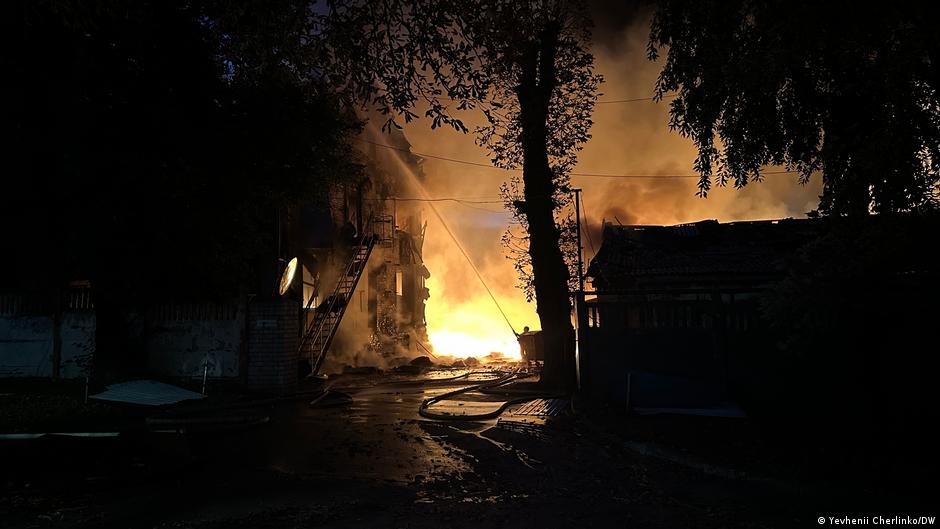
Russian forces attacked Kyiv and Odesa regions, as well as the city of Mykolaiv, on the evening of September 12 and overnight into September 13, according to local authorities. The strikes hit a mix of civilian, logistics, warehousing and energy-related infrastructure, underscoring the continuing pressure on Ukraine’s operating environment for businesses, municipal services and critical-service providers.
In Odesa region, two people were injured after an evening drone attack struck a branch of Nova Poshta, one of Ukraine’s major private delivery and logistics operators. Oleg Kiper, head of the regional military administration, said the facade of the building, glazing and a cargo vehicle were damaged. The State Emergency Service also reported the injuries and damage at the site.
“The facade of the building, glazing and a cargo vehicle were damaged,” Kiper said, according to the regional authorities.
The strike on Nova Poshta is notable because logistics networks are a central part of Ukraine’s wartime economy. Parcel delivery operators, warehouse sites and freight vehicles support not only retail and e-commerce activity but also small businesses, displaced households and the flow of essential goods. Even when casualties are limited, damage to depots, vehicles or sorting capacity can create localized bottlenecks and raise operating costs for companies that depend on reliable last-mile delivery.
Authorities also reported damage in Odesa itself. Serhiy Lysak, head of the city military administration, said a multi-storey residential building had been damaged in an attack on the city. It was the second reported hit on an apartment building in Odesa within a single day. While that damage is primarily a civilian and humanitarian concern, it also adds pressure on municipal management, emergency services and local housing capacity in a major Black Sea commercial hub.
Logistics and Warehouse Disruption
In Kyiv region, the regional military administration said strikes on the evening of September 12 damaged warehouse premises in the Boryspil district and caused a fire. In the Brovary district, a warehouse and a private house were damaged. No information about deaths or injuries was reported by the authorities in connection with those attacks.
For companies operating around the capital, such reports point to a persistent strategic risk: commercial storage and distribution sites remain vulnerable to disruption even outside front-line areas. Boryspil and Brovary are important parts of the broader Kyiv economic zone, where warehousing, transport links and supply chains support retail distribution, construction, manufacturing inputs and consumer goods flows. Damage to warehouse facilities can ripple through inventory planning, insurance, labor scheduling and customer service commitments.
The pattern also highlights the management challenge facing Ukrainian companies and international firms with exposure to the country. Executive decisions increasingly need to account for redundancy in storage, diversified transport routes, backup communications and contingency staffing. In a conventional business environment, these would be questions of efficiency and cost optimization. In Ukraine’s current security context, they have become core operating decisions tied to resilience and continuity.
Kyiv Mayor Vitali Klitschko reported that air defense systems were operating and urged residents of the capital to remain in shelters. The Kyiv regional military administration also reported air alerts in different parts of the region overnight through its Telegram channel. For business operators, repeated alerts carry their own economic cost, interrupting shifts, delaying transport schedules and forcing companies to pause operations even when their assets are not directly hit.
Energy Infrastructure Under Pressure
Mykolaiv also came under attack. After an evening strike on the city’s energy infrastructure, several districts of the regional center were partially left without electricity, according to Heorhiy Reshetilov, head of the local regional military administration. He wrote on Telegram that energy workers would begin restoring power as soon as the security situation allowed work to start.
“As soon as the security situation allows work to begin, energy workers will start restoring electricity supply,” Reshetilov wrote.
Reshetilov later reported the all-clear, then subsequently wrote that an air alert had resumed. That sequence illustrates a recurring management problem for utilities and local administrations: repair work depends not only on technical capacity but also on the timing of renewed alerts and the ability to safely deploy crews. Partial blackouts can affect households, transport, communications, refrigeration, retail outlets and industrial users, even when the outage is geographically limited.
From a corporate strategy perspective, the latest attacks reinforce why energy security has become a board-level issue in Ukraine. Companies that can afford backup generation, battery storage, flexible hours or distributed operations may be better positioned to withstand repeated interruptions. Smaller firms and local service providers, however, often have fewer options and face a sharper trade-off between continuity investments and day-to-day liquidity.
The competitive landscape is also shaped by these disruptions. Large logistics and retail players may have the capital and management depth to reroute deliveries, shift inventory or repair damaged assets. Smaller businesses dependent on a single warehouse, delivery branch or power connection can suffer more severe setbacks from the same event. Over time, that may widen the resilience gap between larger operators and smaller regional firms.
At the municipal level, the attacks add to the operational burden on regional administrations, emergency services and utility companies. Their decisions determine how quickly roads are cleared, fires are contained, power is restored and residents receive public safety information. In a wartime economy, these public-sector management choices are directly linked to private-sector confidence and the ability of local markets to keep functioning.
The reported strikes across Odesa, Kyiv region and Mykolaiv did not produce confirmed fatalities in the information released by local authorities, and only the Odesa region attack on Nova Poshta was reported to have caused injuries. But the targets and damage described by officials show how repeated attacks can affect the underlying systems that businesses rely on: logistics branches, cargo vehicles, warehouses, residential buildings and electricity networks.
For companies operating in Ukraine, the events of September 12 and 13 are another reminder that security risk is inseparable from corporate planning. Supply chains, facility location, insurance coverage, emergency procedures and employee safety protocols are no longer support functions. They are central strategic questions in a market where civilian infrastructure, commercial assets and critical utilities can be hit in the same cycle of attacks.