Georgia Detains Ex-Defense Chief Baramidze in Treason and Sabotage Case
The case against a senior Saakashvili ally underscores how Georgia’s political risk profile is being shaped by prosecutions of former defense officials.

Georgia has detained Giorgi Baramidze, a former acting prime minister, defense minister and interior minister, on an accusation framed by prosecutors as “treason against the homeland, namely sabotage.” The case centers not on a corporate transaction or a government contract, but on political speech about the 1992-1993 war in Abkhazia. Even so, for business leaders and investors watching Georgia, it adds to a wider picture of institutional risk, political polarization and management of the state’s security narrative.
Baramidze, 58, is one of the leaders of the United National Movement, the party associated with former president Mikheil Saakashvili. Georgia’s deputy prosecutor general, Amiran Guluashvili, said Baramidze would be charged with treason, specifically sabotage, and that the detention was carried out “on the basis of a court ruling.” The Prosecutor General’s Office published its announcement on Friday, September 11.
The trigger for the case was an appearance by Baramidze on the program “Birth of Georgia,” released on July 18 on the YouTube channel of the same name run by Iago Khvichia, leader of the opposition libertarian party New Political Center - Girchi. According to prosecutors, Baramidze said that at the start of the 1992-1993 war in Abkhazia, Georgian soldiers did not take prisoners but shot them on the spot, and that for this reason the Georgian side, unlike the Abkhaz side, did not have an exchange fund.
Prosecutors described the statement as “baseless and fabricated” and said it carried an intentional ideological and propaganda character.
Law enforcement opened an investigation on August 7 after a complaint from the state service for veterans’ affairs. The Prosecutor General’s Office later said it had not identified facts confirming that prisoners had been shot by the Georgian army. Officials argued that Baramidze’s words damaged Georgia’s image, harmed the reputation of the country’s Defense Forces, offended the honor and dignity of veterans of the war in Abkhazia and fallen servicemen, and threatened reconciliation and confidence-building among people affected by the conflict.
Political Risk Becomes a Management Variable
For Georgia’s corporate sector, the case is another reminder that political stability, legal predictability and reputational control are not abstract governance themes. They influence capital allocation, board-level risk assessments and the willingness of foreign partners to commit to long-term projects. Georgia has long marketed itself as a comparatively agile, business-friendly jurisdiction in the region. But high-profile prosecutions of former ministers, particularly in defense and security-related roles, can sharpen questions about the durability of institutions and the boundaries between political accountability and political pressure.
The Prosecutor General’s Office has said Baramidze’s remarks undermined state and national interests, external security, defense capability and state institutions. It also argued that the comments endangered the process of reconciliation and trust-building among populations affected by the conflict, undermined Georgia’s policy of peace and de-occupation, and complicated the normal work of state agencies. Prosecutors now intend to seek Baramidze’s pretrial detention through the courts, while the investigation continues.
From a management perspective, the case shows how the Georgian state is treating narratives about territorial conflict as an asset requiring active protection. In corporate terms, the government is defending institutional brand equity: the reputation of the Defense Forces, the legitimacy of state policy and the credibility of its post-conflict strategy. The risk is that aggressive protection of that narrative can also raise concerns about speech, political competition and judicial independence, all of which matter to investors assessing country risk.
A Pattern Around Former Defense Officials
Baramidze is now the fifth former Georgian defense minister to face a criminal case in the country. That pattern is significant. Defense ministries often sit at the intersection of procurement, national identity, security policy and political power. In many markets, legal action involving former defense chiefs would be read not only as a law-enforcement matter but also as a signal about elite competition and the management of past governments’ legacies.
In July, Saakashvili ally Bacho Akhalaia was sentenced to two and a half years in prison after being found guilty of public calls to overthrow the government following his statement at a court hearing. In November 2025, former interior and defense minister Irakli Okruashvili was sentenced to seven years in prison in a case involving the high-profile killing of 19-year-old Amiran Robakidze during a police check in 2003. Okruashvili had supported Mikheil Saakashvili until 2007.
Former members of the government linked to the ruling Georgian Dream party are also in prison. Juansher Burchuladze, who headed the Defense Ministry until February 2024, and Irakli Garibashvili are both behind bars. Garibashvili served as defense minister from 2019 to 2021, prime minister from 2021 to 2024, and chairman of Georgian Dream from 2024 until April 2025. Burchuladze is accused in particular of accepting bribes, while Garibashvili is accused of money laundering.
The inclusion of figures from both the Saakashvili-linked opposition and the ruling party’s own former leadership gives the prosecution landscape a broader institutional character. Yet the political implications remain substantial. For companies operating in Georgia, especially those exposed to public procurement, infrastructure, energy, logistics or regulated sectors, the key question is not simply whether individual cases are legally justified. It is whether enforcement appears consistent, transparent and insulated from political cycles.
Competitive Landscape for Power and Credibility
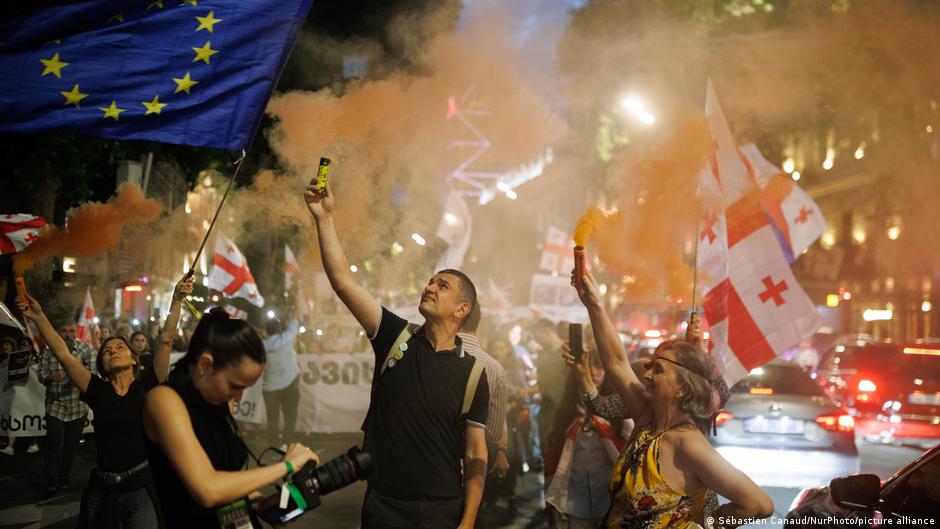
The case also reflects an intensifying competition over credibility among Georgia’s political forces. The United National Movement remains closely tied to Saakashvili’s legacy, while Georgian Dream has governed through a period marked by sharp domestic divisions and scrutiny over the country’s strategic direction. Opposition media appearances, prosecutorial responses and judicial decisions are now part of a wider contest over who controls the interpretation of Georgia’s past wars and present security policy.
For Biz Review readers, the most material takeaway is that Georgia’s political operating environment is becoming more complex at the senior-management level. Executives assessing the market must look beyond tax rates, licensing procedures and headline growth indicators. They must also factor in the stability of institutions, the treatment of former officials, the sensitivity of national-security narratives and the potential for political disputes to move rapidly into the legal arena.
The Prosecutor General’s Office has said the public will be informed about the course and results of the investigation. Until then, the Baramidze case will remain more than a legal proceeding. It is a signal event in the evolving relationship between Georgia’s political class, its security institutions and the broader business climate that depends on confidence in both.