Russian Military Strikes Zaporizhzhia and Sumy with Guided Bombs Causing Civilian Casualties
Russian airstrikes on Ukrainian cities Zaporizhzhia and Sumy resulted in multiple civilian deaths and damaged critical infrastructure.
On July 19, 2023, the Russian armed forces launched targeted airstrikes using guided aerial bombs on the Ukrainian cities of Zaporizhzhia and Sumy, leading to significant civilian casualties and damage to both residential and industrial infrastructure.
Impact on Civil Infrastructure and Human Cost
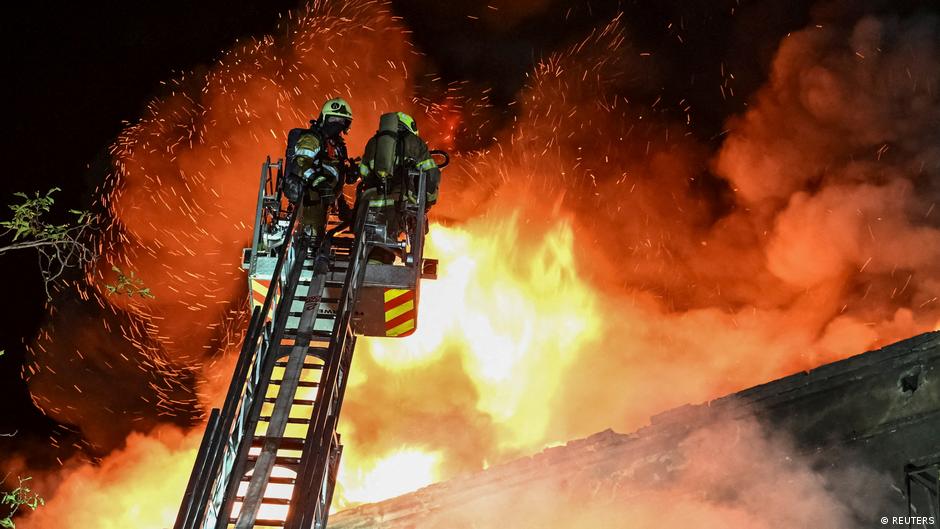
In Zaporizhzhia, the strikes hit a residential area, completely destroying two floors of a five-story apartment building and damaging windows and balconies in a nearby nine-story building. Additionally, a logistics operator's terminal caught fire as a result of the attacks. According to the head of the Zaporizhzhia Regional Military Administration, Ivan Fedorov, at least two civilians were killed and 42 others injured, including eight children.
Earlier the same day, Russian forces targeted Sumy with guided bombs, striking the Kovpakivskyi district. The strikes damaged both residential and industrial zones, resulting in one fatality and injuring at least three others, according to Sumy Regional Military Administration head Oleg Hryhorov.
"Preliminary reports indicate seven guided aerial bombs were used, with confirmed impacts in both living areas and industrial sectors," Hryhorov stated.
The attacks underscore the strategic use of precision-guided munitions in targeting key urban centers, affecting civilian populations and critical infrastructure, which may have broader implications for regional stability and economic activity.
Business and Strategic Implications
The targeted destruction of logistics terminals and residential zones poses significant challenges for regional supply chains and workforce stability. The damage to logistics infrastructure in Zaporizhzhia could disrupt freight movement and inventory management for businesses relying on these hubs, potentially increasing operational costs and complicating supply chain resilience efforts.
Moreover, the impact on civilian infrastructure and increased risk to local populations may prompt businesses to reassess their risk profiles and contingency strategies in the affected regions. This escalation in military activity raises concerns over the security environment and could deter investment, complicate mergers and acquisitions, and affect management decisions for companies with regional exposure.
Corporate leaders and investors should monitor these developments closely, factoring in geopolitical risks and operational disruptions when planning for the coming months. Enhanced due diligence and adaptive business continuity plans will be essential for navigating the evolving competitive landscape in Eastern Ukraine.