NATO Intercepts Russian Strategic Bombers Over Baltic Sea in Planned Military Flight
Russian Tu-22M3 bombers and Su-30/Su-35 fighters were intercepted by NATO aircraft during a routine patrol over international waters.
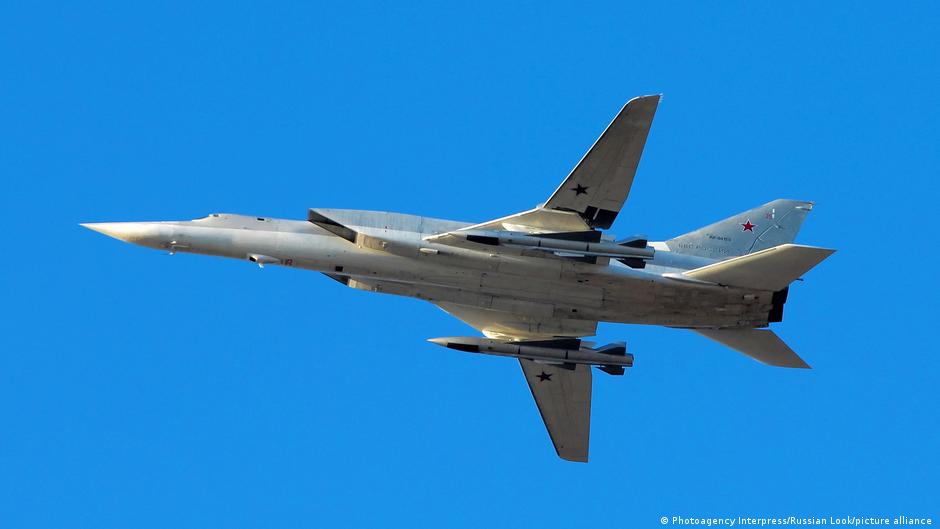
On April 20, NATO forces intercepted a formation of Russian military aircraft, including strategic bombers and fighter jets, flying over the Baltic Sea. According to the Russian Ministry of Defense, the flight was a scheduled operation conducted over neutral international waters.
Details of the Interception
The interception involved French Rafale fighters, supported by aircraft from Sweden, Finland, Poland, Denmark, and Romania. They engaged with Russian long-range strategic bombers, specifically the supersonic missile-carrying Tu-22M3 bombers, as well as Su-30 and Su-35 fighter jets flying in formation.
French military command reported that Russia deployed two Tu-22M3 bombers sequentially alongside approximately ten Su-30 and Su-35 fighters to escort the larger bombers. Journalists from international news agencies witnessed two Rafale jets depart from the Lithuanian airbase in Šiauliai to intercept the Russian group.
The Russian Ministry of Defense confirmed that the Tu-22M3 bombers, accompanied by Su-35 fighters, executed the flight for over four hours. The statement highlighted that at certain segments of the route, foreign fighters shadowed the Russian bombers, reflecting the complex aerial dynamics over the Baltic region.
"The flights are conducted in accordance with international regulations," a Russian defense spokesperson noted, emphasizing compliance with global protocols despite the heightened military activity in the area.
Context and Regional Military Activity
The Baltic region remains an area of significant military interest for both NATO and Russia. In the week prior to the interception, Lithuanian defense officials reported multiple incidents involving Russian aircraft allegedly breaching flight regulations. These breaches included disabling transponders, flying without submitting flight plans, and failing to establish communication with air traffic controllers.
From April 13 to 19, NATO pilots were scrambled four times to intercept Russian aircraft committing such violations, according to Lithuanian Ministry of Defense data. These practices increase risks of miscalculation and complicate regional security dynamics.
For NATO, the interception serves not only as a protective measure to monitor Russian military movements but also as a demonstration of their readiness and cooperative defense posture among member and partner states in Northern and Eastern Europe.
Business and Strategic Implications
This aerial activity signals ongoing military assertiveness by Russia in a region that is critical for European security and trade routes. For defense contractors and aerospace companies within NATO countries, such incidents underscore increased demand for advanced fighter jets, surveillance systems, and integrated air defense technologies.
The coordinated response involving multiple NATO air forces highlights the importance of multinational collaboration in managing regional threats. Defense industries may see strategic opportunities in joint development programs and cross-border military contracts as member states seek to modernize their fleets and improve interoperability.
Moreover, the persistent Russian air operations over the Baltic Sea could influence defense procurement policies and budget allocations across NATO countries, potentially accelerating investments in rapid-response capabilities and intelligence-sharing infrastructures.
In summary, while the April 20 flight reflected a routine engagement in international airspace, the broader pattern of increased Russian military flights and NATO interceptions underscores enduring tensions and strategic competition in the Baltic region.