Mass Protests and Unrest in Serbia Highlight Political and Governance Challenges
Anti-government demonstrations in Serbia escalate amid accusations of corruption and political instability.
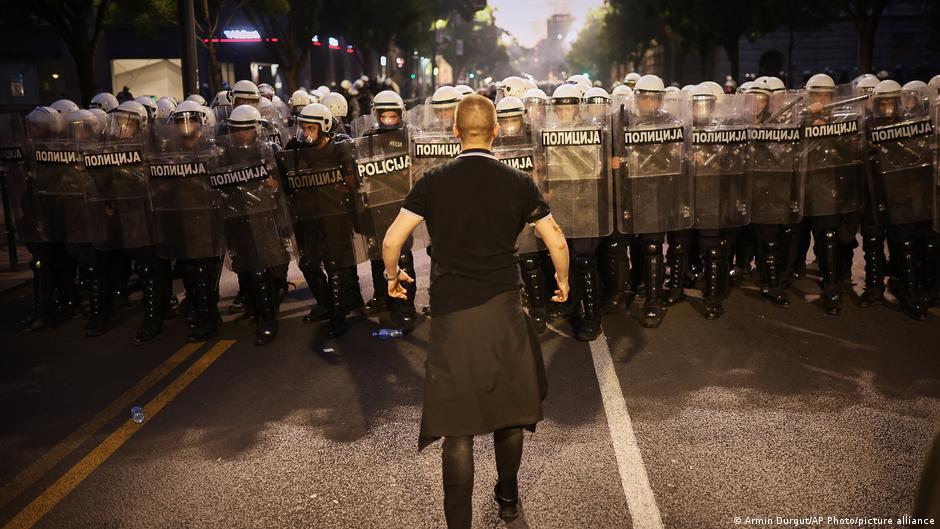
Serbia is currently facing significant civil unrest following anti-government protests that have intensified since November 2024. The demonstrations, initially sparked by a tragic infrastructure failure, have evolved into widespread calls for political accountability and government change.
Background and Escalation of Protests
The protests began in November 2024 after a concrete canopy collapsed at the renovated railway station in Novi Sad, resulting in 16 fatalities. Public outrage quickly focused on alleged corruption, negligence during construction, and cronyism among Serbia's political elite. The demonstrators have demanded the resignation of President Aleksandar Vučić and the holding of early parliamentary elections.
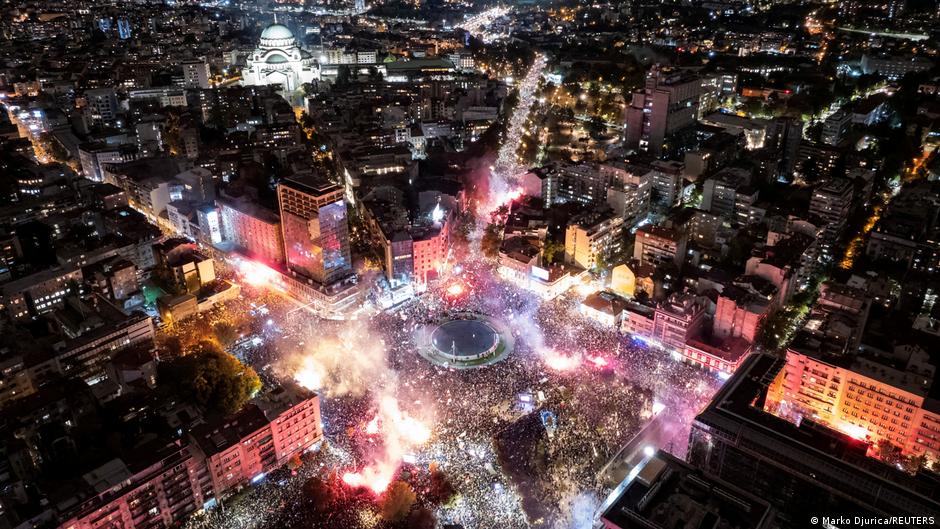
Despite government efforts to suppress these protests, including transport restrictions and police action, tens of thousands have rallied in Belgrade and other cities across Serbia. On May 23, 2026, large-scale student-led protests culminated in violent clashes near Pionirski Park in central Belgrade. Police responded with tear gas and stun grenades to disperse crowds who reportedly attacked law enforcement with firecrackers, stones, and improvised explosive devices.
“All those who attacked police officers ensuring security after the public gathering will be identified and held accountable under the law,” stated the Belgrade prosecutor's office, condemning assaults on police as criminal offenses.
In total, 23 people were detained during these latest disturbances, according to Interior Minister Ivica Dačić. The government's attempts to prevent mass mobilization included the Serbian state railway canceling all train routes to and from Belgrade on the day of protests, as vehicles converged from across the country.
Political and Corporate Implications
The continuing unrest has already precipitated high-level political changes. In January 2025, Prime Minister Miloš Vučević, a former Novi Sad mayor, stepped down amid the protests. His successor, medical professor Đuro Mačut, was appointed by President Vučić, who emphasized that democratic countries cannot continually alter election schedules in response to protests.
The president confirmed that snap parliamentary elections will be held in 2026, underscoring the government's intention to maintain a semblance of political stability despite upheaval.
From a business and governance perspective, these events expose vulnerabilities in Serbia's institutional frameworks, highlighting risks associated with corruption and weak regulatory oversight. Infrastructure failures linked to poor governance not only undermine public trust but also threaten future investment and economic development.
Corporations operating in Serbia must navigate an increasingly volatile environment marked by public dissatisfaction, potential for policy shifts, and uncertain regulatory landscapes. The government's continued enforcement measures and political reshuffles indicate efforts to stabilize the situation, but the underlying causes raise questions about the long-term sustainability of Serbia’s governance model.
Investors and multinational companies should monitor these developments closely, as prolonged instability could impact market confidence, supply chains, and strategic planning in the region.