Kremlev Says Donald Trump Jr. Repaid Wedding Event Costs Amid Scrutiny
The Russian businessman’s account adds a governance and reputational dimension to questions over private ties around the U.S. president’s family.
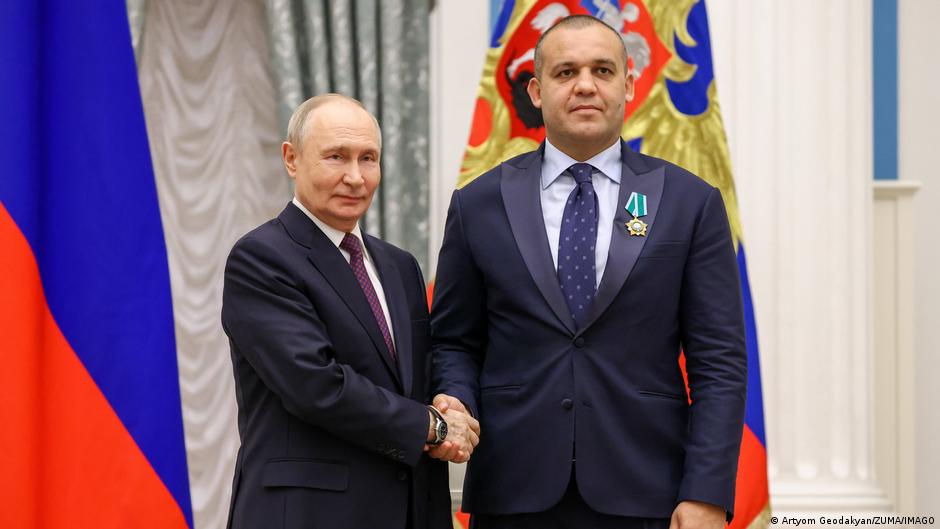
Russian entrepreneur Umar Kremlev said Donald Trump Jr. repaid money connected to part of his wedding celebrations, a disclosure that keeps attention on the intersection of political proximity, private hospitality and reputational risk for prominent business figures.
Kremlev, who is close to Vladimir Putin and heads the International Boxing Association, made the statement on Tuesday, October 6, at a press conference in Istanbul. His comments followed earlier remarks by U.S. President Donald Trump, who had also said his son returned the money.
The matter first entered the public domain after ProPublica reported on September 14 that Kremlev had paid part of the expenses for wedding festivities involving Donald Trump Jr. in the Bahamas. The episode has since become more than a personal or social matter. For business leaders operating across politically sensitive jurisdictions, it raises familiar questions about influence, optics, compliance and the management of relationships with politically exposed individuals.
A Private Payment With Public Consequences
According to Kremlev, the reimbursement took place, although he described the situation as puzzling because he did not view the event as a special gift. He said he had not attended the wedding itself, but rather that the matter concerned a shared event.
"We were at a common event, I was not at the wedding. As for whether he returned the expenses or not, yes, he returned them," Kremlev said, according to Russia’s TASS news agency.
Kremlev added that he did not understand what exactly the money was being returned for, saying it had been a general gathering rather than a special present. He compared the situation to inviting guests to a country house and then billing them, calling such an approach foolish. He also said he has friendly relations with Donald Trump Jr. and that he had never asked him, or anyone else, to help him.
From a business strategy perspective, the remarks are notable for what they reveal about the risks of informal networks. Wealthy entrepreneurs often cultivate access through philanthropy, sports, hospitality and elite social events. Those interactions can be entirely legal and routine, but when they involve relatives of sitting leaders, especially in a cross-border context involving Russia and the United States, they can quickly become politically and commercially sensitive.
The International Boxing Association itself is a global sports organization with commercial, regulatory and reputational exposure. Kremlev’s leadership role means that scrutiny of his personal dealings can also draw attention to the governance environment around the institution he heads. In sectors such as sports, media and entertainment, where relationships and sponsorships are core assets, the boundary between personal hospitality and strategic positioning can be difficult to police.
Trump’s Response and the Reimbursement Question
President Trump addressed the issue on September 18, confirming that Donald Trump Jr. had repaid Kremlev. Speaking to reporters, he said, "As I understand it, he paid him back," and described the arrangement as normal practice when a friend pays for a wedding celebration. The president also indicated that he considered it acceptable for a businessman close to Russian authorities to have helped finance festivities linked to his son.
Trump had earlier told Axios that he had no idea who Umar was, had never heard of him, and that Kremlev had not paid for Don and Bettina’s wedding, which he said took place in a completely different location and on a different day from the party in question. Trump described the event as an after-party held in their honor and said there was nothing wrong with it. He also said he did not attend that party.
The distinction between the wedding and an after-party may prove important in political terms, but for corporate governance and reputational risk analysis, the narrower point may matter less than the broader pattern of association. When a prominent foreign business figure covers costs linked to the family of a sitting president, the subsequent repayment may reduce one category of concern while leaving others unresolved. Stakeholders may still ask why the payment occurred, how it was documented, whether any expectations were attached, and how decision-makers assessed the optics before or after the event.
For executives and investors, the episode illustrates the commercial consequences of personal networks. In highly scrutinized environments, private hospitality can become a reputational liability even when participants insist there was no improper intent. Companies and organizations connected to such figures may face questions from regulators, counterparties, sponsors and political actors who view access to power as a material risk factor.
Potential Oversight and Political Stakes
Axios also reported that a senior Democrat on the U.S. House Oversight Committee could investigate reports that Kremlev paid for Trump Jr.’s celebrations. Representative Robert Garcia of California sent a letter to White House chief of staff Susie Wiles saying Democrats on the committee were investigating numerous ways in which the Trump family had allegedly sought to enrich itself by using proximity to the head of state.
According to Axios, if Democrats win control of the House of Representatives in the upcoming November 3 midterm elections, Garcia is likely to become Congress’s chief investigator. The outlet wrote that the investigation offered a clear indication of the direction he would take in that role.
That potential oversight path adds a political M&A-style risk lens to what might otherwise appear to be a social controversy. For parties connected to public officials, a single transaction or reimbursement can become part of a broader diligence file. Investigators may focus not only on the amount of money involved, but also on timing, intent, relationships, access and any possible pattern of benefit. In that sense, the issue resembles the scrutiny often applied in corporate transactions where politically exposed persons, sanctions-sensitive jurisdictions or opaque financing arrangements are involved.
For Kremlev, the immediate message was that the money had been returned and that he saw the matter as ordinary hospitality among friends. For the Trump family, the repayment provides a factual response to the allegation that a foreign business figure bore costs connected to the celebration. But the episode remains strategically significant because it places private relationship management inside a public accountability framework, with possible congressional scrutiny and reputational implications for all parties involved.