Kosovo's Vetëvendosje Party Secures Parliamentary Victory Amid Coalition Challenges
Vetëvendosje wins 43% in early Kosovo elections but faces coalition-building hurdles to form government.
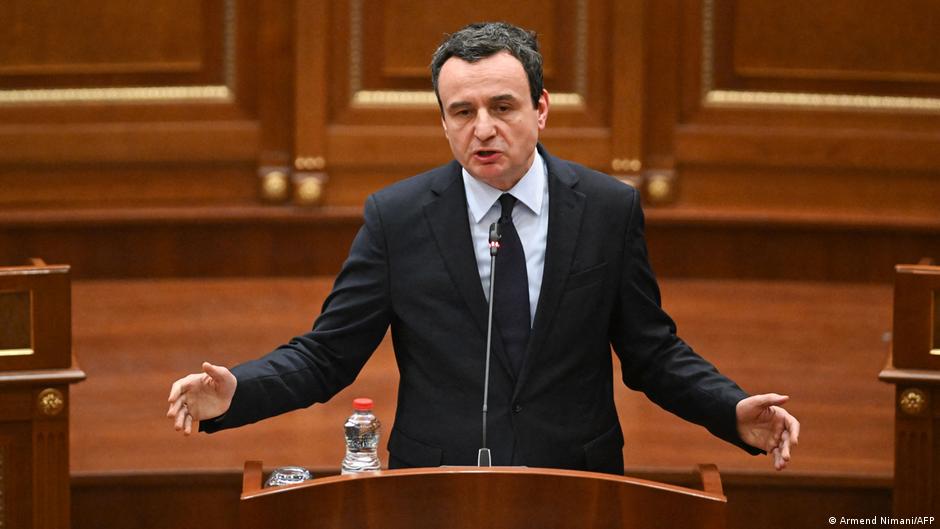
In a significant development in Kosovo's political landscape, the ruling Vetëvendosje party, led by Prime Minister Albin Kurti, has secured a commanding victory in the early parliamentary elections held on June 7. Official results, accounting for 99.4% of votes, show Vetëvendosje capturing 43% of the electorate's support, reaffirming its role as the dominant political force in the young Balkan state.
Election Results and Political Dynamics
Despite the emphatic win, Vetëvendosje does not yet have an outright majority, making coalition negotiations essential to form a stable government. The main opposition, the Democratic Party of Kosovo (PDK), garnered 21% of votes, while the Democratic League of Kosovo (LDK) secured 18%. The Alliance for the Future of Kosovo (AAK) followed with approximately 7%. Voter turnout remained modest, at just under 37%, reflecting persistent political fatigue after three elections in less than 18 months.
This election cycle reflects ongoing political volatility in Kosovo. December 2025 elections had seen Vetëvendosje obtain 51.1% of votes, yet the parliament was dissolved in April due to an impasse over the presidential candidacy, a largely ceremonial role but vital for institutional stability. The repeated electoral contests underscore challenges in Kosovo's governance and political consensus-building.
“Vetëvendosje’s victory reaffirms its leadership but underscores the necessity of coalition partnerships to stabilize Kosovo’s government amid persistent institutional challenges.”
Strategic Implications and Governance Outlook
Albin Kurti’s administration maintains a pro-Western orientation, with aspirations for European Union membership shaping much of its policy framework. Brussels continues to urge Kosovo’s leadership to establish resilient state institutions as a prerequisite for reforms aligned with EU accession criteria. Kurti’s government adopts a firm stance on the Serbian minority, particularly in northern Kosovo, aiming to extend governmental authority and integration in this sensitive region.
Since Kosovo declared independence from Serbia in 2008, recognition remains partial internationally, with Serbia, Russia, and five EU members—Spain, Cyprus, Greece, Slovakia, and Romania—refusing to acknowledge its sovereignty. These geopolitical dynamics complicate Kosovo’s path to EU integration and affect internal political strategies, especially regarding interethnic relations and external diplomacy.
The current electoral outcome places Vetëvendosje in a strong but not unassailable position. The necessity of coalition-building will test the party’s negotiation acumen and willingness to compromise, vital for breaking the recurrent political deadlocks. How Kurti navigates these challenges will significantly influence Kosovo’s governance stability, reform trajectory, and international standing.