Former German Foreign Minister Annalena Baerbock to Join Columbia University Faculty in New York
Annalena Baerbock will transition to academia in the U.S. as co-director of a global leadership program after her UN General Assembly term ends.
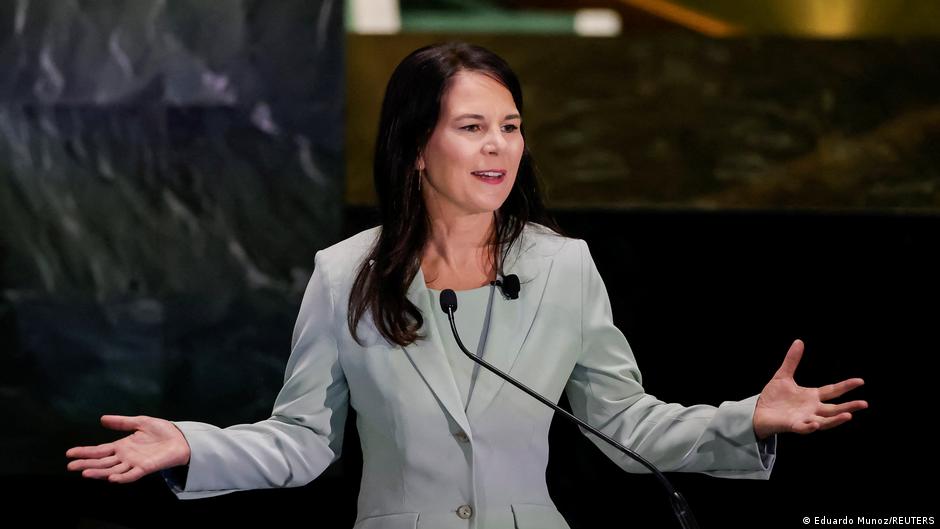
Former German Foreign Minister Annalena Baerbock is set to embark on an academic career in the United States following the completion of her tenure as President of the United Nations General Assembly. She will take up a faculty position at Columbia University in New York City, where she will co-direct a Master of Public Administration program specializing in global leadership.
Strategic Shift from Politics to Academia
Baerbock's move reflects a strategic transition often observed among senior politicians who leverage their international experience in academic and advisory roles. Sources affiliated with Germany's Green Party, of which Baerbock remains a member, have confirmed that she will join Columbia University's School of International and Public Affairs (SIPA). Her appointment is not a traditional research professorship but a practice-oriented teaching role designed to bridge theory and real-world governance.
Specifically, Baerbock will serve as co-director of SIPA’s Master of Public Administration in Global Leadership program. This role includes responsibilities as a guest lecturer and public speaker, and is slated to last for three years. The program itself is positioned to cultivate future leaders in global public administration, an area where Baerbock’s diplomatic and political acumen will add significant value.
"Moving to New York has allowed me to immerse myself in the city's diversity, which has been a great source of relief and inspiration," Baerbock previously noted during her UN appointment.
Baerbock has held the presidency of the UN General Assembly since September 2025—a role typically limited to one year to ensure regional rotation and leadership diversity. Her term will conclude in early September when Bangladeshi diplomat and former foreign minister, Khalilur Rahman, will succeed her.
Contextualizing Baerbock's Career Move
Baerbock’s academic appointment follows a precedent set by other prominent German Green politicians, notably Joschka Fischer. Fischer, who served as Vice-Chancellor and Foreign Minister from 1998 to 2005, transitioned into academia and consultancy after his political career, including lecturing on foreign policy at Princeton University and advising on international energy projects for Siemens AG.
This trajectory highlights a broader pattern where former high-level diplomats capitalize on their governance experience within educational institutions and the private sector, often influencing policy and strategy beyond their governmental tenure.
For Columbia University and its SIPA program, Baerbock’s inclusion strengthens the institution's competitive position in global leadership training. Her diplomatic background and firsthand experience in international governance provide students with unparalleled insights into the complexities of multilateral institutions and global policy-making.
As Baerbock transitions from active politics to academia, her role underscores the interconnectedness of diplomacy, leadership education, and corporate governance. Her presence at Columbia aligns with increasing demand for leaders adept at navigating both public and private sector challenges in a globalized environment.