EU Summons Russian Envoy Over Missile Strikes Targeting Ukrainian Military and Diplomatic Sites
EU plans to expand sanctions on Russian defense firms following targeted attacks on Ukrainian arms exhibition and Latvian consulate.
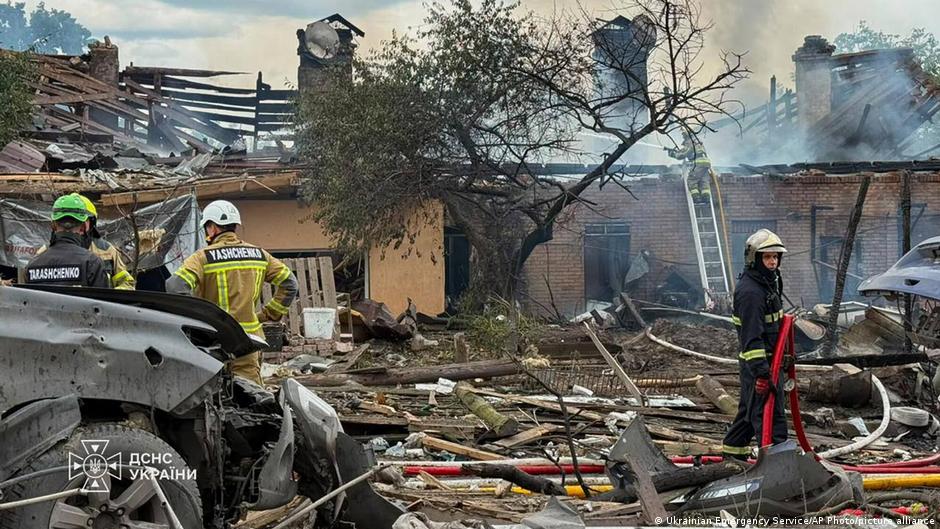
On July 24, the European Union's High Representative for Foreign Affairs and Security Policy, Kaja Kallas, condemned the latest missile strikes by Russian forces on Ukrainian territory, including an attack on an arms exhibition held at a private military range near Kyiv and the honorary consulate of Latvia in Sloviansk.
The European External Action Service (EEAS) announced it would summon the Russian Permanent Representative to the EU to deliver a formal protest note regarding the "indiscriminate" attacks, which resulted in civilian casualties and damaged diplomatic premises. Kallas characterized the strikes as a calculated part of Moscow's ongoing aggressive policy.
Strategic Implications of the July 24 Attacks
The missile attack in Kyiv Oblast specifically targeted a private polygon in Bucha district where a drone and weapons exhibition was underway. Ukrainian Prosecutor General Ruslan Kravchenko reported that the strike resulted in ten fatalities and approximately one hundred injuries, and that investigations are underway into the organization of the event.
Russia's Ministry of Defense confirmed the strike, claiming that key developers and manufacturers of UAVs (unmanned aerial vehicles), along with representatives of Ukrainian drone command and intelligence services, were present at the site. Moscow framed the attack as a preemptive measure against Ukrainian forces conducting drone strikes on Russian territory.
"We will summon the Russian representative to the EU and propose expanding the sanctions list to include additional enterprises and entities of the Russian military-industrial complex," stated Kaja Kallas, signaling an escalation in EU's punitive measures.
The Latvian consulate in Sloviansk was also hit, an incident Kallas noted as a blatant violation of international law and diplomatic norms by Russia.
Ukraine's Advancing Drone Capabilities and Defense Strategy
President Volodymyr Zelensky, speaking in an interview published the same day, revealed Ukraine's strategic plans to enhance its drone warfare capabilities. He disclosed that current Ukrainian UAVs can strike targets up to 3,000 kilometers away, with ambitions to field drones capable of reaching 10,000 kilometers by 2027.
Zelensky emphasized the importance of domestic production of these technologies, mentioning ongoing negotiations with the United States to establish joint manufacturing facilities within Ukraine. He noted the rapid evolution of drone technology on the battlefield, with drones becoming obsolete every three to six months, underscoring the need for continuous production lines rather than stockpiling.
Additionally, Ukraine is creating a specialized command within its armed forces focused on long-range influence operations against Russia. This command will oversee drone attacks on targets deep within Russian territory, an approach Kyiv considers effective in pressuring Moscow to reconsider its military campaign.
These developments highlight the intensifying military and diplomatic contest between the EU, Ukraine, and Russia, with significant ramifications for the military-industrial sectors and security policies of all parties involved.