Army Secretary’s Exit Deepens Pentagon Leadership Reset Under Trump
Daniel Driscoll’s resignation after clashes with Defense Secretary Pete Hegseth highlights strategic tensions over force planning, procurement and command changes.
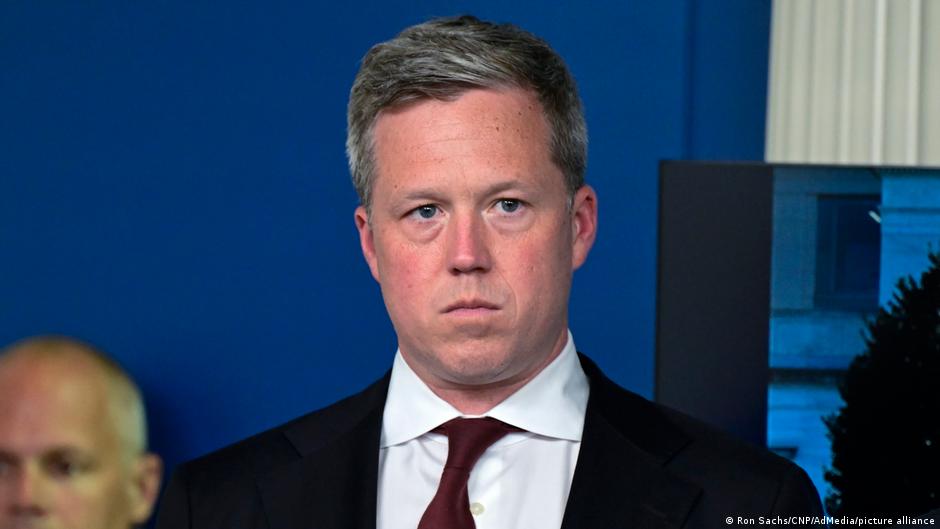
US Army Secretary Daniel Driscoll has submitted his resignation to President Donald Trump after months of disagreements with Defense Secretary Pete Hegseth over the direction of US military development and the dismissal of several officers, according to The Wall Street Journal and other media reports. The development, reported late on Monday night into Tuesday, September 1, was later echoed by Reuters and the Associated Press.
NBC News, citing sources, said the White House has accepted Driscoll’s resignation. He is expected to leave the Pentagon in the coming days, according to the Journal. The timing matters beyond personnel politics: Driscoll’s departure would remove a Senate-confirmed civilian leader from the Army at a moment when the Trump administration is managing a broader reshaping of Pentagon leadership and military priorities.
From a business and management perspective, the resignation points to a clash over operating model, capital allocation and decision-making authority inside one of the US government’s largest institutions. At issue, according to the reports, were differences over the course of US armed forces development and over personnel removals. Those disputes appear to have widened into a break between two senior officials whose roles sit at the center of force design, procurement priorities and institutional culture.
“Secretary Driscoll effectively advanced President Trump’s ‘Make America Strong Again’ agenda in the Department of the Army, demonstrating outstanding leadership during historic military operations and returning priority to combat readiness and the destructive power of weapons, aiding negotiations between Russia and Ukraine and in many other areas,” White House principal deputy press secretary Anna Kelly said in a statement quoted by the Journal and AP.
Strategy, procurement and management tensions
Driscoll had served as Army secretary since February 2025. Reuters noted that in the role he argued for a “flexible approach,” supported the purchase of cheaper weapons by the Army and criticized major defense manufacturers. That position is significant because it suggests a fault line not only about military doctrine, but also about supplier relationships and spending discipline. In commercial terms, Driscoll appeared to favor a model that emphasized cost pressure, adaptability and potentially broader competition, rather than reliance on established large contractors.
That stance can create friction in any large organization, especially one balancing entrenched supplier networks, long procurement cycles and political oversight. In the Pentagon context, disagreement over cheaper systems versus traditional procurement channels is not simply a budgeting issue. It affects industrial policy, timelines for capability delivery and the relative influence of large incumbents in the defense sector. If Driscoll was pushing harder for lower-cost acquisitions and a more agile posture, his departure could be read as a setback for that approach, or at minimum as evidence that consensus around it had broken down at the top.
The leadership conflict also appears tied to personnel decisions. The source material says the dispute involved the firing of a number of officers, placing the resignation within a wider pattern of management turnover. Reuters has framed Driscoll’s possible departure as another step in leadership change at all levels of the Pentagon during Trump’s second presidential term. In April, Reuters recalled, Army Chief of Staff Randy George and several other senior military officials were dismissed. Taken together, those moves suggest a top-down restructuring campaign with both strategic and cultural implications.
For investors and industry executives watching US defense policy, such turnover can be more than political theater. Leadership instability at the Pentagon can delay decisions, redirect modernization priorities and change how programs are evaluated. It can also alter the balance of power between civilian appointees, uniformed leadership and major contractors. When senior officials leave over strategic disagreements, the market signal is that future procurement choices may become more centralized, more contested or more vulnerable to abrupt change.
The Journal had previously reported on August 21 that Driscoll planned to step down at the end of the year because of his conflict with Hegseth. At that time, Reuters noted that his departure would leave the Army without a Senate-confirmed leader while the United States sought to end the war against Iran, which it said had been launched together with Israel nearly six months earlier. That context sharpens the operational risk surrounding the resignation. Even if the Army’s chain of command remains intact, an unfilled civilian leadership post during a period of external conflict and internal restructuring can complicate oversight and coordination.
Driscoll’s profile adds another layer to the story. He is described as a friend and former classmate of Vice President JD Vance. In November 2025, he was appointed as President Trump’s new special envoy for Ukraine, replacing Keith Kellogg. Those connections indicate that Driscoll was not a peripheral administrator but a politically connected figure with a portfolio touching both military management and foreign policy. His exit therefore carries implications not only for Pentagon governance, but also for how the administration staffs sensitive national security roles.
In corporate terms, the episode resembles an executive departure triggered by unresolved conflict over strategic direction, organizational redesign and supplier policy. The Pentagon is not a company, but the underlying management dynamics are familiar: a division leader advocating one operating philosophy collides with the chief executive team’s preferred model, while parallel personnel removals accelerate the breakdown. Once that happens, resignation can become the cleanest way to resolve a power struggle, even if it leaves the institution facing short-term uncertainty.
What happens next will matter for several constituencies. Inside government, the key question is whether Driscoll’s exit clears the way for a more unified defense agenda under Hegseth or instead exposes deeper fractures in the administration’s national security team. For defense manufacturers, the issue is whether the Army continues to pursue cheaper systems and criticism of large suppliers, or shifts toward a different procurement posture. For foreign policy observers, the concern is whether the churn affects continuity in areas linked to Ukraine and the broader regional conflicts referenced in the reports.
What is already clear is that Driscoll’s resignation is not an isolated personnel move. It sits at the intersection of strategic planning, procurement philosophy and executive control. That makes it a governance story as much as a political one, and a reminder that in Washington, leadership transitions can shape markets and institutions long before formal policy changes are announced.