Tashkent Markets Report Strong Profit Growth in 2025 Amid Diverse Economic Dynamics
Tashkent's farmer markets show significant profit increases in 2025, with notable disparities highlighting evolving economic trends and market strategies.
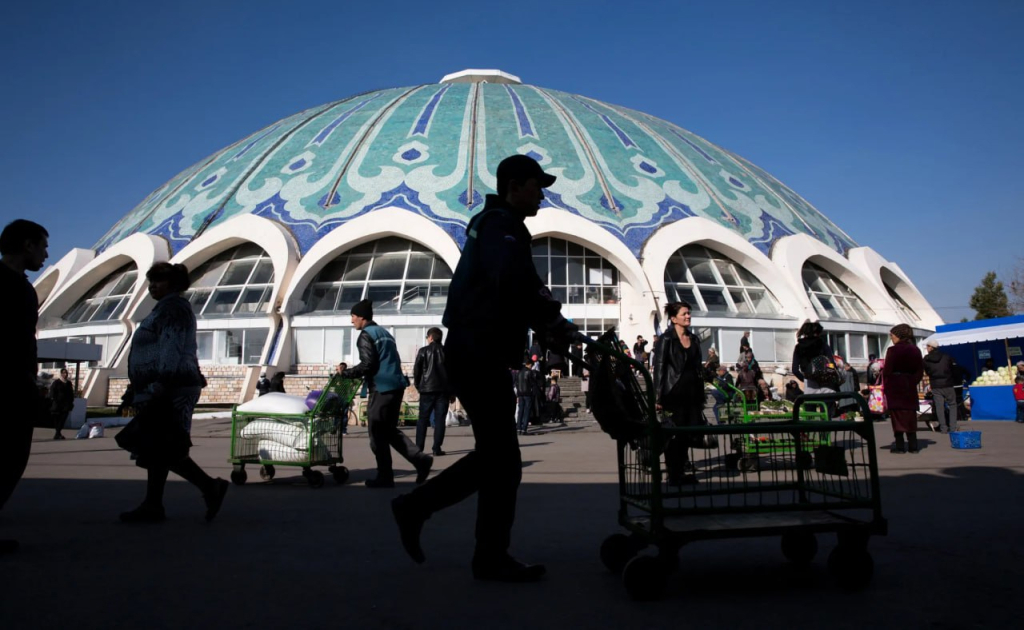
Robust Profit Growth in Key Agricultural Markets
In 2025, the major farmer markets of Tashkent demonstrated considerable financial gains, signaling strong shifts in consumer behavior and capital market dynamics within Uzbekistan's capital city. The "Askiya" farmer market led the surge with annual profits reaching 7.95 billion Uzbek soms, a dramatic rise from 4.1 million soms recorded in 2024. This exponential growth underscores both effective market strategies and heightened consumer demand for agricultural products.
Following "Askiya," the "Mirobod" market generated 6.2 billion soms in profits, representing an increase of 1.8 billion soms compared to the previous year. Meanwhile, the "Farhod" and "Chorsu" markets secured third and fourth positions with profits of 3.7 billion and 3.1 billion soms, respectively, indicating widespread profitability across major agricultural trade hubs.
Stability characterized the "Yunusobod" market, which achieved a modest profit increase of 50 million soms, totaling 2.6 billion soms in 2025. This steady performance reflects consistent consumer demand and resilient supply chains within that segment.
Challenges and Divergent Market Performances
However, not all markets mirrored this upward trajectory. The "Qo‘yliq" farmer market reported a sharp downturn, with profits falling by 1.6 billion soms year-over-year to reach only 557.3 million soms. This decline suggests underlying structural challenges or localized economic obstacles impacting this particular market segment.
"The decrease in profits at the 'Qo‘yliq' farmer market, down by 1.6 billion soms to 557.3 million soms, indicates localized challenges despite overall market growth."
Beyond agricultural markets, Tashkent's "Sergeli" automobile market exhibited remarkable expansion, posting net profits of 18.85 billion soms in 2025. This surge signals increased consumer purchasing power and diversification within the capital’s market economy, emphasizing the growing importance of the automotive sector in urban consumption patterns.
Macro-Economic Implications and Strategic Considerations
The widespread profit improvements across Tashkent’s farmer markets in 2025 point to rising consumer spending capacity and enhancements in market efficiencies. These trends likely reflect broader economic reforms, urbanization trends, and modernization of supply chains and retail infrastructure.
Nevertheless, the contrasting performance of markets such as "Qo‘yliq" underscores the need for targeted policy initiatives to address localized economic disparities and foster sustainable, inclusive growth. The automotive sector’s robust gains further highlight shifting consumer preferences, which may affect urban transport policies and environmental planning in the near future.
For corporate leaders and policymakers, these developments emphasize the critical importance of continuous sectoral performance monitoring and adaptive economic strategies to support balanced urban economic development.