North Korea Missile Launch Raises Strategic Risk for Regional Security Alliances
South Korea said North Korea fired at least one ballistic missile toward the Sea of Japan after a border blast injured three soldiers.
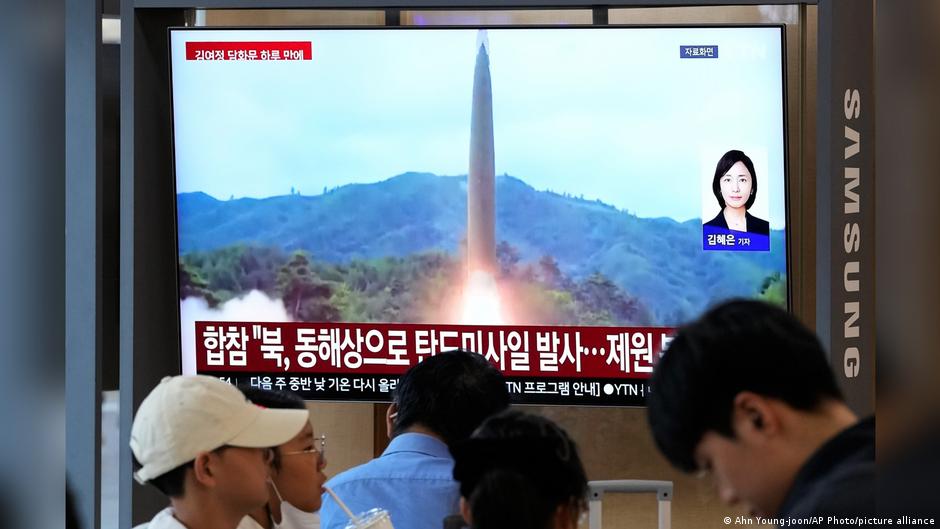
North Korea has fired at least one ballistic missile toward the Sea of Japan, South Korea’s military said on Saturday, October 3, adding a new layer of strategic risk to an already tense security environment on the Korean Peninsula.
The launch was reported by South Korea’s Joint Chiefs of Staff, which said Seoul, Washington and Tokyo were maintaining a high level of military readiness while closely sharing information on North Korean ballistic missiles. The statement points to the increasingly integrated security posture among South Korea, the United States and Japan, a partnership that has become central to managing North Korea’s missile activity and the broader regional balance of power.
“South Korea, the United States and Japan maintain a high level of combat readiness while maintaining close information exchange on North Korean ballistic missiles,” Seoul said.
The missile launch followed a separate confrontation near the border between North and South Korea. On September 21, an explosion in the border area injured three South Korean soldiers. Seoul believes the incident was caused by the detonation of North Korean anti-personnel mines, according to AFP, citing South Korean military sources.
South Korean Defense Minister Kang Shin Chul accused Pyongyang of violating the armistice and said Seoul intended to take responsive measures. South Korea’s Joint Chiefs of Staff also demanded an apology from North Korea. Pyongyang rejected the accusations, with Kim Yo Jong, the sister of North Korean leader Kim Jong Un, calling the South Korean claim “extremely low and dirty,” according to North Korea’s state news agency KCNA.
Alliance Coordination Becomes the Core Strategic Response
For policymakers and defense planners, the immediate business-like question is not only the technical nature of the launch, but how it affects the management of regional risk. South Korea’s statement emphasized readiness and information sharing among three countries rather than unilateral action. That framing matters. It indicates that Seoul is treating the launch as part of a recurring strategic challenge requiring coordinated intelligence, deterrence and crisis management.
The United States and Japan were named directly in Seoul’s statement, underscoring the operational importance of trilateral cooperation. In corporate strategy terms, the three governments are acting less like separate stakeholders and more like partners in a high-risk consortium, pooling information and aligning response protocols against a persistent external threat.
North Korea, meanwhile, continues to operate as a disruptive actor in the regional security landscape. By launching ballistic missiles and rejecting accusations connected to the border incident, Pyongyang maintains pressure on Seoul while testing the cohesion and responsiveness of the South Korea-U.S.-Japan framework. That dynamic makes each incident more than a standalone military event; it becomes a test of alliance management, decision-making discipline and signaling.
The Border Incident Adds Pressure on Management Decisions
The September 21 explosion has sharpened the stakes for South Korea’s leadership. Three South Korean soldiers were injured in the incident, and Seoul’s assessment that North Korean anti-personnel mines were responsible has turned a border security event into a political and military decision point.
Defense Minister Kang Shin Chul’s accusation that Pyongyang violated the armistice places the South Korean government under pressure to demonstrate resolve while avoiding uncontrolled escalation. His statement that Seoul intended to take responsive measures suggests that the administration is weighing both deterrence and proportionality. In crisis management terms, the challenge is to respond firmly enough to protect credibility without creating a chain reaction along one of the world’s most militarized borders.
North Korea’s denial, delivered through Kim Yo Jong, also has strategic value for Pyongyang. By rejecting Seoul’s claim in harsh language, North Korea seeks to contest the narrative, avoid accepting responsibility and keep room for further maneuver. The use of Kim Yo Jong as a messenger is itself notable because she is a prominent political figure closely associated with the North Korean leadership.
A Long-Running Conflict Without a Peace Treaty
The latest missile launch and border dispute are rooted in the unresolved structure of the Korean conflict. South Korea and North Korea technically remain at war. The Korean War ended in 1953 with an armistice agreement, not a formal peace treaty. The two countries are separated by the Demilitarized Zone, with a demarcation line running through the middle of the mined strip.
That geography makes even limited incidents highly sensitive. The Demilitarized Zone is one of the most fortified and heavily mined borders in the world. A blast in that area is therefore not just a local military event; it can quickly become a test of the armistice system that has managed hostilities for decades without resolving the underlying conflict.
For regional competitors and allies alike, the current episode highlights the fragile operating environment around the Korean Peninsula. North Korea’s missile activity forces South Korea, the United States and Japan to sustain high readiness and deepen intelligence coordination. The border explosion adds a ground-level security issue to the missile threat, creating simultaneous pressure across military, diplomatic and political channels.
From a strategic perspective, Seoul’s response will be watched for how it balances deterrence, alliance coordination and escalation control. Pyongyang’s rejection of responsibility and continued missile activity suggest that the competitive landscape will remain defined by pressure, denial and rapid signaling. In that environment, management decisions by military and political leaders can carry consequences far beyond the immediate incident.