King Charles III’s U.S. Visit Highlights Strains in Anglo-American Relations Amid Middle East Tensions
The British monarch’s first visit since 2007 aims to mend faltering U.S.-UK ties affected by divergent Iran policies and political rhetoric.
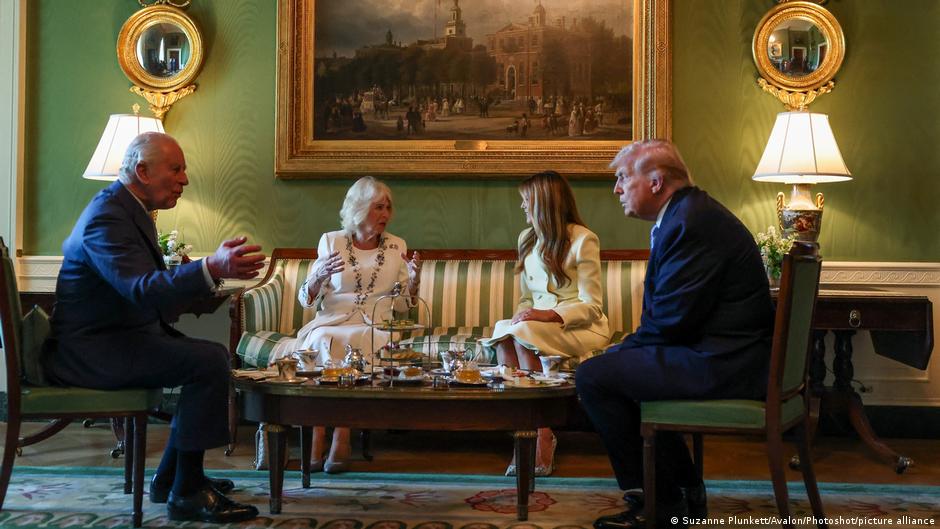
King Charles III and Queen Camilla arrived in the United States on April 27, marking the first official visit by a British monarch since 2007. The visit comes at a delicate moment in Anglo-American relations, strained by differing approaches to the ongoing conflict involving the United States, Israel, and Iran.
During their arrival at the White House, President Donald Trump and First Lady Melania Trump hosted the royal couple, signaling continued diplomatic engagement despite underlying tensions. The visit's primary focus is strategic reconciliation amid recent diplomatic challenges.
Contextualizing the Diplomatic Rift
The backdrop to the royal visit is a marked shift in British foreign policy under Prime Minister Keir Starmer. In March, Starmer refused U.S. requests to use British military bases for strikes against Iran and declined to deploy Royal Navy ships to the strategically vital Strait of Hormuz, a critical chokepoint for global oil transportation.
This stance contrasts sharply with the U.S. administration's aggressive posture toward Iran. In an April interview, President Trump criticized the Royal Navy's capacity, describing its vessels as “too old” to effectively reopen the Strait of Hormuz. Further, Trump disparaged NATO allies, labeling them "cowards" for their positions on the Iran conflict and even suggested serious consideration of a U.S. withdrawal from the alliance.
"The United Kingdom’s fleet would not be able to unblock the Strait of Hormuz because its ships are too old," Trump stated, underscoring his skepticism toward allied military capabilities.
Meanwhile, Prime Minister Starmer has openly expressed frustration over global energy price volatility, blaming external actors, including President Putin and President Trump, for fluctuating energy costs impacting British consumers. Starmer's government is pursuing investments to reduce the UK’s dependence on foreign energy suppliers and mitigate geopolitical risks.
Strategic Implications and Business Outlook
The visit carries significant implications for transatlantic business and security cooperation. The U.S. and UK have historically maintained close defense and economic ties, but recent policy divergences on Middle East security and energy strategies highlight emerging challenges.
King Charles III’s planned address to a joint session of the U.S. Congress—the first by a British monarch since Queen Elizabeth II’s 1991 speech—symbolizes an attempt to reaffirm shared values and commitments. The royal itinerary also includes participation in memorial events for the victims of the September 11 attacks, reinforcing the enduring nature of the bilateral alliance despite current frictions.
Heightened security following a shooting incident near the Washington Hilton, where a Trump-hosted White House Correspondents’ Dinner took place, underscores the tense environment surrounding the visit.
From a corporate strategy perspective, the evolving geopolitical landscape necessitates reassessment by multinational enterprises and defense contractors operating across the Atlantic. Energy companies and infrastructure investors, in particular, must navigate shifting regulatory environments and government priorities as the UK accelerates its energy independence agenda amid global instability.
Overall, King Charles III’s U.S. visit serves as a high-profile platform for recalibrating the U.S.-UK partnership amid complex geopolitical and economic pressures, with potential ripple effects for transatlantic trade, security cooperation, and multinational corporate strategies.