Iran Implements New Vessel Information Declaration for Passage Through Strait of Hormuz
Iran mandates detailed ship and cargo disclosures amid mounting geopolitical tensions in the Strait of Hormuz.
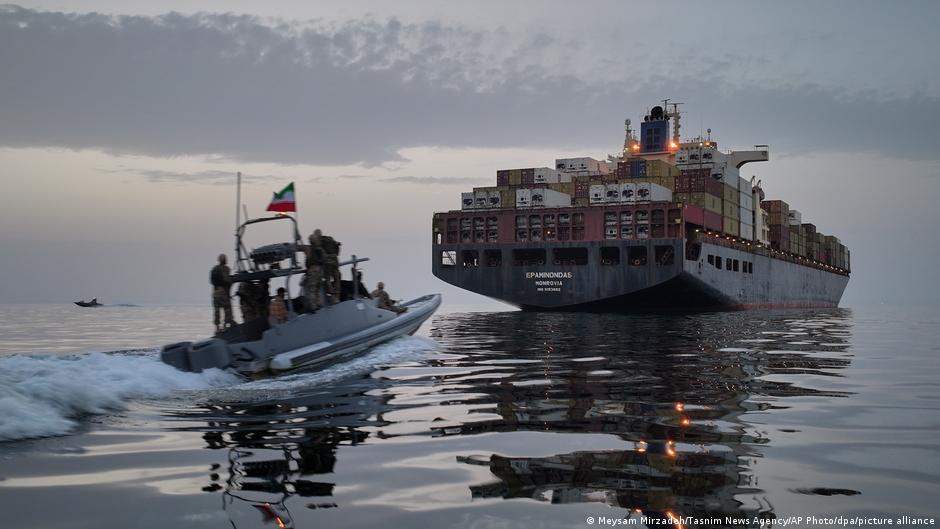
Iran has introduced a new regulatory measure requiring shipping companies to complete a comprehensive "Vessel Information Declaration" for tankers passing through the strategically crucial Strait of Hormuz. This development reflects Tehran’s increasing assertiveness in controlling maritime traffic in a region pivotal for global energy supply chains.
Details of the New Declaration and Its Strategic Implications
On May 5, the Iranian government established the Persian Gulf Strait Authority (PGSA), which formulated the declaration comprising over 40 specific questions. These inquiries demand extensive disclosure including the vessel’s name, identification number, previous names, country of origin, and destination port. Further requirements extend to the nationalities of the vessel’s owners, operators, and crew members, as well as detailed descriptions of the cargo onboard.
Submissions must be sent electronically to the PGSA prior to the vessel’s transit through the Strait. The declaration explicitly places full responsibility for accuracy and completeness on the submitting party, with any consequences for misinformation borne exclusively by them.
"Responsibility for providing false or incomplete information lies solely with the applicant, who will bear all consequences arising thereof," states the communication from the PGSA.
While the document does not state whether Iran intends to impose passage fees explicitly, previous Iranian statements and external analyses suggest that transit tolls could serve as a revenue stream, potentially funding reconstruction efforts following damage from past conflicts, particularly bombings attributed to U.S. and Israeli actions. Current estimates indicate Iran might charge up to $2 million per vessel.
However, any such payments would be prohibited for U.S. individuals, companies, and entities under American jurisdiction or control, as clarified by the U.S. Treasury Department. The prohibition extends to payments made directly or indirectly to the Iranian government or the Islamic Revolutionary Guard Corps (IRGC) for safe passage.
Geopolitical Context and U.S. Military Response
This regulatory development coincides with heightened tensions and military maneuvers in the area. On May 4, the United States launched "Operation Project Liberty," a naval initiative aimed at escorting commercial vessels through the Strait to deter potential Iranian aggression. U.S. President Donald Trump warned of retaliatory measures should Iranian forces attack American ships, underscoring the operation’s defensive posture.
Secretary of State Mike Pompeo emphasized that the operation is defensive rather than offensive, noting, "There will be no shooting unless we are fired upon first." However, on May 6, President Trump announced a temporary pause of the operation to explore diplomatic options, prompted by requests from Pakistan and other nations to finalize an agreement with Iran.
Corporate and Strategic Implications for Shipping and Energy Firms
From a corporate strategy perspective, the new declaration requirement introduces significant compliance and operational considerations for shipping companies navigating the Strait of Hormuz, through which approximately 20% of global petroleum passes. The detailed disclosure mandate may increase administrative burdens and raise concerns over data security and commercial confidentiality.
Moreover, the potential for transit fees—coupled with geopolitical risks of sanctions and military confrontations—forces firms to reassess risk management strategies, insurance costs, and route planning. Companies with American ties face additional legal constraints due to prohibitions on payments to Iranian entities, possibly necessitating alternative logistical arrangements or engagement with international legal frameworks.
In the competitive landscape, these developments may advantage shipping operators and energy producers able to adapt rapidly to evolving regulatory and security environments, emphasizing the value of robust compliance operations and geopolitical risk intelligence.
Conclusion
Iran’s introduction of a detailed vessel information declaration represents a strategic move to exert greater control over one of the world’s most critical maritime chokepoints. For global shipping and energy companies, this change underscores the intricate nexus between corporate operations and international geopolitics. Navigating this terrain will require enhanced due diligence, strategic agility, and close monitoring of diplomatic developments affecting the Strait of Hormuz.